
We humans are wired to feel better about getting more for a lesser price. So when we see product bundles, its perceived value instantly increases in our mind.
Product bundling is a strategy where a curated collection of products and/or services is coupled together and sold as one unit. A bundle of products/services offered together at a lower price is a better deal for customers rather than buying products individually.
However, there are many types of product bundling strategies. In this blog, we explore mix and match product bundles and learn how it can benefit eCommerce retail businesses.
Let’s get started!
Why mix and match product bundles matter in 2026
With increasing competition, brands are increasingly implementing mix and match product bundles. Here are some reasons why you must include them in your Shopify strategy.
1. Rising customer expectations for personalization and control in ecommerce
Generic product recommendations are not enough for today’s customers. They expect experiences that are tailored to their needs and preferences. Mix and match bundles enable brands to create this personalization.
With mix and match bundles, customers get to choose products and curate their own bundles. For example, in a skincare mix and match bundle, customers can choose if they want to add a cleanser, a serum, a moisturizer, a toner, or a skin oil in their bundle. They can choose products based on their need for replenishing, seasonal needs, or any skincare routine needs.
Creating their own bundles leads to higher satisfaction and lower returns. Instead, it can lead to higher repeat purchases in future. They feel a sense of ownership as they mix and match products for their bundle.
2. Mix and match bundles outperform flat discounts for AOV growth
Flat discounts can backfire and impact margins. If you keep giving flat discounts, customers might get into a habit of waiting for discounts and buying only at reduced prices. On the contrary, mix and match bundles create a perception of added value.
For instance, when customers see ‘Buy 3 of your own choice, save 15%’, more than the discount, they are attracted to the idea of having choice and variety. Mix and match bundles increase AOV.
Moreover, customers often hesitate to try new products. But a mix and match offer makes trying new products easy because it also feels like a smart financial decision given the discount on the bundle. Mix and match offers create a competitive advantage for brands. Customers often choose retailers that let them customize over those that merely offer discounts.
3. Pressure on brands to increase AOV without increasing CAC
With rising customer acquisition cost (CAC), it is imperative for brands to increase AOV to balance cost. Instead of spending more, brands need to extract more value from each acquired customer.
How do mix and match bundles help increase AOV?
1. First order value maximization
To ensure enough margins, your new customers’ first order value should be more than what you spent to acquire them. For this, it is important to increase AOV. Mix and match bundles encourage customers to buy more products, increasing AOV.
2. Product discovery at scale
When customers create their own bundles, they explore products they wouldn’t have known about before. For instance, a customer might have come to your Shopify store for product A, but ends up discovering B and C as well. This discovery doesn’t cost you anything for marketing.
3. Retention mechanism
Customers who create mix and match bundles are more likely to return to your Shopify store because they have built preferences for more than just one product. They’ve liked not one but two or three or more products of yours, which means they will come back for one or more of those products.
4. The attribution advantage
Mix and match bundle offers are exclusive to your Shopify store. Unlike offers on coupon sites, they can not be found elsewhere, only on your site. This makes ROI tracking easier for you.
4. Shift from discount-led to value-led strategies
Ecommerce offers are moving away from discounts to offer actual value to customers. Discounts aren’t effective because frequent discounts train customers to wait for lower prices and never pay the full price. Moreover, only competing on price can destroy profit margins.
Mix and match bundles are a perfect example and strategy for offering value. They make customers feel like they’re creating something valuable for themselves. Mix and match bundles enable customers to discover more products, solve multiple needs via one bundle, as well as offer savings when they buy more.
What are mix and match product bundles?
Mix and match product bundles include a selection of products or services that customers can select from a predefined list. The bundles come at a discounted price. Mix and match bundles are unlike regular bundles — fixed bundles and multipack bundles — that club together the same or complementing products.
Mix and match can have a combination of products that may not be related to each other. Thus, mix and match product bundles have an element of personalization and customization in them. This type of eCommerce product bundling strategy helps brands increase customer spending and meet the needs of a broader customer base.
Mix and match bundles vs other types of product bundles
How do mix and match bundles different from other types of product bundles, such as fixed and multipack bundles? Let’s find out.
Types of bundles
Here are three different types of product bundles, including mix and match bundles.
1. Fixed bundles
Fixed bundles include a few products selected by the retailer and sold together as a package. They are pre-curated and cannot be changed by the customer. For instance, a beauty bundle including a cleaner, toner, and moisturizer. The customer has to purchase the entire bundle as it is.
2. Multipacks
Multipacks include multiple units of the same product. For example, a set of three ties, or a pair of T-shirts. Multipacks lead to AOV as customers purchase more than one piece at discounted prices. This strategy is especially effective for products that require frequent replenishing.
3. Mix and match bundles
Mix and match bundles allow customers to choose products based on their preference and create a bundle that is available at a discounted price. It gives customers control, adds personalization, and increases AOV.
Comparison of different types of bundles
Here are a few different ways in which you can compare the three different types of bundles:
| Fixed | Multipack | Mix and match | |
| Personalization | No personalization as the bundle is pre curated | Low personalization as the same product is repeated | High personalization as customer chooses products |
| Flexibility | No choice | Choice of quantity only | Full choice |
| AOV impact | High if bundles are appealing | Moderate with predictable increase | High as customers select items of their preference |
| Best for | Complementary products, gift sets, starter kits | Consumables, essentials, repeat purchases | Varied products, customization and product discovery |
| Type of customer | Values convenience and discount | Bulk buyers | Values choice and personalization |
| Setup complexity | Low, create specific bundles | Low, same SKU | Moderate, define rules and eligibility |
When each bundle type works best
Here’s what each bundle type is most suited for based on customer preference and retail factors.
1. Fixed bundle
- For products that complement each other
- For products frequently bought together
- Gift sets, starter kits, seasonal collections, subscription boxes
- When convenience is priority
- For customers who value curated offers
- When retailers want to sell specific inventory products
- For customers new to a product category
2. Multipack bundle
- For consumable products, essentials, and everyday products
- For warehouse clubs
- For value-conscious customers who expect bulk pricing
- For products that customers like to stock up
3. Mix and match bundle
- When retailers have a diverse inventory
- For products that have high-level of personal preference
- For customers who enjoy discovery and variety
- When retailers want to introduce new products
- When retailers need to sell products across SKUs
- For customers who want to give customized gifts
What are the benefits of mix and match product bundles?
Today’s savvy customers expect brands to meet all their expectations, for instance, they want convenience when shopping, lower prices and discounts, customization and personalization, etc. And guess what, mix and match Shopify bundles, tick many of these factors. Here are the benefits that make mix and match bundles a must-have in your Shopify strategy.
1. Higher average order value
Mix and match bundles increase the average order value (AOV) as customers end up buying more products in one go rather than buying single products. Brands can offer enticing discounts on bundles to encourage customers to buy more.
Including strategies that increase the AOV is essential as it can improve your profitability. AOV is an important KPI for eCommerce businesses. Hence, by encouraging customers to buy more and spend more via mix and match bundles, you can increase your revenue and profitability.
2. Reach a broader customer base
Mix and match bundles include a wide range of products, services, and product categories, thus, improving customer reach. You can cater to a wider customer base with mix and match bundles. Unlike fixed bundles where customers cannot choose their own products, mixed bundles offer more flexibility, making it easy for a broader customer base to shop these bundles.
3. Flexibility for customers
Not all types of eCommerce product bundle strategies offer flexibility to customers, but mix and match bundles do. Customers are not bound to buy pre-fixed bundles. They can choose the products they want in their bundles giving them more flexibility. This sort of flexibility brings convenience and better value for money. Hence, customers prefer mix and match more than other types of bundles.
4. Improved product discovery
In mix and match bundles, products are interchangeable. This improves the opportunities for customers to try new products. Moreover, eCommerce brands can create bundles with a mix of old and newly-introduced products so that customers become aware of the new products.
Moreover, in mix and match product bundles, customers can include products from different categories. For example, clothing, footwear, sport, and makeup in one bundle, thus, helping brands drive more visibility for their products.
5. Increases engagement
When customers get to choose products they want to add to their mix and match bundles, it increases the level of their participation and engagement in shopping. Customers can curate their bundles based on their preference, likes, and needs. This makes them spend more time on your site browsing and discovering products, thus increasing engagement.
Industries where mix and match bundles work best
Mix and match bundles work specifically well for certain industries, for instance, those that have recurring product purchases. Here are some of those industries.
1. Beauty and skincare
People tend to buy the same beauty and skincare products instead of trying new ones. This makes mix and match bundles perfect. For instance, customers can choose if they want to buy a moisturizer, cleanser, toner, serum, or sunscreen.
Retailers can introduce new products in their inventory, make product discovery easier for customers, and set up offers on seasonal products. It makes it easier for customers to try new products, too.
2. Supplements and wellness
Wellness shoppers have specific requirements. For example, better sleep, increased energy, stronger immunity, etc. Mix and match bundles allow them to shop for products they need for their wellness issues. They can replenish the items that are over.
This strategy works well because supplements have to be replenished regularly. Making the bundle flexible and personalized means each individual customer can buy exactly what they need.
Food and beverage
Providing mix and match bundles for food and beverages can help increase AOV. Customers want to try new flavors and products every now and then. Mix and match bundles solve this problem.
Moreover, a single household might need different products based on each individual family members’ needs. This strategy also makes it easy for retailers to introduce new products to customers.
Apparel and accessories
Mix and match naturally works for fashion and accessories. Customers like to pick items based on their personal style. This strategy works well for basic clothes as well as occasion wear. For example, if a customer is buying products for a winter holiday, they might want to choose if they want a sweater, a jacket, warm socks, winter caps, gloves, etc. Not just that, they’d want to choose the colors, size variants, too.
This strategy helps reduce returns and exchanges, saving time and resources for retailers. For customers, it increases satisfaction levels.
Pet brands
When it comes to pets, a one-size-fits-all bundle doesn’t work. Each pet has specific needs based on their size, breed, medical requirements, age, etc. For example, a household having a cat and a dog can benefit from a mix and match bundle by choosing products required for both pets. Customers benefit from customization, personalization, discounted prices, and the convenience of buying multiple products together in one single package.
How to create mix and match product bundles (step by step)
Creating mix and match Shopify bundles may seem easy, but there are a few factors you must consider to make it a success. Follow these steps to ensure you are on the right track with your eCommerce product bundling strategy.
1. Identify the products
When creating bundles, think strategically. Your first step is to identify products. Let’s explore a few different ways to put together products for your mix and match bundles for Shopify.
- Choose products from complementing as well as different categories
- Choose fast-selling products as well as those that have low preference
- Add a mix of products of different prices — some high-value and some cheaper
- Introduce newly launched products with fast-selling and popular products
2. Decide the number of products
Next, you must decide the number of products you want to allow in one bundle. For instance, 5 or 8 or 10 or more. Here are some factors you could consider for deciding the number of products in one bundle:
- Your target audience and their preference
- Past purchase data to understand average number of products
- Think of a manageable number in terms of discount, packaging and delivery
- The variety of your products and categories. More products would be more suitable if the variety is more
3. Set product quantity limits
You don’t want your customers to stock up on products because they are on discounts. Hence, it is critical to set a limit on the number of products a customer can add to their bundle. For example, a customer might choose to buy a large quantity of a high-value product at a discounted price. However, this could mean low revenue and profits for your business. Moreover, if you allow unlimited quantities, you could end up with stockouts and customers buying in bulk and selling at a higher price.
4. Set up ‘required’ products
Another important strategy is to set up at least one ‘required’ or ‘mandatory’ product in the bundle. Setting up a required product means customers have to compulsorily choose that product in their bundle and the other products could be of customers’ choice. This could be a high-value product, ensuring the AOV remains high. This allows you to enable customers to enjoy the benefits of customization at the same time ensure your profitability.
Your mandatory product could also be a fast-selling, popular product. This way you can ensure more sales. Additionally, you can also ensure there is enough stock of the required product at all times.
5. Determine your mix and match product bundle pricing
When you create a mix and match product bundle, you must ensure that the total pricing is lesser than purchasing products individually. At the same time, you have to ensure profitability. Hence, determining the pricing after thorough calculations, permutations and combinations.
Work out different discount strategies, such as:
- Fixed amount discount
- Percentage discount
- Variable discount based on final bundle price, etc.
6. Determine the number of bundles
You could offer as many different Shopify bundles you like in your store. However, you must keep some factors in mind. When you’re deciding the number of bundles, you must ensure that each bundle is different from the other. Here are some factors to consider:
- Manageability – ensure you are able to manage the number of bundles
- Ensure your Shopify mix and match bundle tool is able to manage the number of bundles
- Decide the number of bundles based on factors such as theme, product category-based, seasonal, etc.
- Your customer segments and preferences
Explore Appstle Subscriptions App to create Shopify bundles for your eCommerce business.
7. Name your bundle
Next, make your bundle shopping enjoyable and engaging for customers by giving unique names to each bundle. Naming bundles will also make it easy for customers to look for the bundles they prefer to buy. You name the bundles based on the value, the products, categories, or give them other unique and attractive names.
8. Start marketing your bundle
Once you’re ready with all the basics of your eCommerce product bundling strategy, you must begin marketing it. Because no matter how good your mix and match bundles are, if customers don’t know about them, they will not be able to buy them.
Here are a few factors to consider:
- Your marketing strategy must cater to your audience demography
- Create a strategy for various online channels such as website, email, social media, third-party websites, influencer marketing, etc.
- Highlight the key factors in your marketing content, such as discounts, value add to customers, among other attractive features
9. Optimize your mix and match product bundles
Just like any other marketing strategy, you must ensure you consistently monitor, track and optimize your mix and match product bundle strategy. Customers’ preferences and market trends are continuously changing and so, you have to keep up with them.
Here are a few things you could do:
- Collect data to understand the performance
- Use a Shopify bundling app that help you collect data and insights
- Collect customer feedback and review
- Engage in social listening and other activities to understand customer sentiment
Key metrics to track for mix and match bundle performance
1. Bundle AOV vs non-bundle AOV
Compare average order value of bundles and non-bundle purchases. This helps measure your bundle strategy’s revenue impact. When done correctly, your bundle AOV will be more than the individual purchase AOV. With this, you can analyze whether your bundles are enticing enough to make customers spend more.
2. Bundle conversion rate
By measuring bundle conversion rate, you can know how many visitors convert to customers. For instance, high conversions means your bundles are effective, very high conversions might mean only motivated buyers find your bundles, and high traffic with low conversions could mean there are pricing issues or other problems.
3. Margin per bundle
This metric helps understand your actual margins on mix and match bundles. To measure this, you have to consider discounts, cost of goods, fulfillment, and packaging expenses. Compare bundle margins to margins when you sell products individually.
4. Inventory velocity of bundled products
This metric tracks how quickly bundled products move compared to individual sales. It is critical for inventory planning and cash flow management. For instance, you can improve sales of products with slow turnover when included in popular bundles. By measuring this metric, you can optimize your entire catalog’s inventory.
Common mistakes brands make with mix and match bundles
Here are some mistakes brands make that you should avoid.
1. Allowing unlimited quantities of high-value SKUs
If you have a fixed price mix and match bundle and you allow customers to select products across high-value SKUs, it could lead to high margin erosion. To avoid this, you must implement product tiering or quantity limits within bundles. For instance, restrict high-value products to one per bundle, create separate pricing tiers for standard and for premium products. Or create a maximum retail value threshold.
2. Too many choices causing decision paralysis
Too many options often lead to decision fatigue and lower conversions. Customers spend more time making decisions and leave without any purchase. Effective bundle strategies must limit selections to a few carefully chosen products. This makes customers’ decisions easier. Another tactic is to show popular products first. You can also create pre-curated bundles that allow customers to swap one or two products, enabling personalization.
3. Over-discounting without checking margins
Many brands offer bundle discounts based on what competitors are offering. But without analyzing your product margin implications, this could lead to loss. To avoid this, think of worst-case scenarios before launching mix and match bundles. Implement dynamic discounting to ensure you do not over-discount.
4. Poor mobile UX for bundle selection
An increasing number of consumers are shopping from their mobile devices. A poor mobile experience for bundles can lead to lower conversions, and even customer churn. For instance, small product images, complex checkout processes, etc., are just a few of the many issues. It is critical to optimize your mobile bundle experience from start to end, test bundle interfaces for small devices, and address issues continuously.
Advanced pricing strategies for mix and match bundles
Apply these pricing strategies for your mix and match bundles to increase conversions and profit margins.
1. Tiered unlock pricing
This pricing strategy is based on the psychological principle that encourages customers to buy more to unlock better value at higher purchase thresholds. When you create different levels that each offer specific benefits, customers feel encouraged to achieve more by reaching higher thresholds.
What makes this an effective pricing strategy for mix and match bundles?
It’s the variety of benefits and increasing value. For instance, in a flat discount bundle, you’re offering the same benefit to all customers – those who purchase a bundle of 2 as well as those who buy 6 products. But in a tiered unlock pricing structure, customers that spend more, receive more value.
Here are some tips to follow:
- Space tiers strategically. Analyze purchase patterns – are customers buying 3 or 4 products on an average? Based on this, set your first tier above the natural buying pattern to encourage more sales
- Word it in a manner that it has a psychological impact. For instance, “Unlock 20% savings when you buy 5 items.”
- Show progress bars to show how close customers are to the next tier
- Make each tier feel easily attainable to encourage customers to engage and buy based on their requirements.
2. Anchoring high-margin SKUs to protect profitability
Anchoring your most profitable products as compulsory around which customers can create their mix and match bundles can ensure profitability. Even if you have a high discount on these bundles, profit is guaranteed.
Here are a few tips to follow:
- Ensure the high margin product is something that customers want, not something you want to clear from your inventory
- Look for products that have 60% profit margins
- Make high-margin products easily accessible via bundles than they are when bought individually. For example, a premium perfume is sold at full price when bought individually, but at a 20% discount in bundles
- Make the high-margin product compulsory around which customers can create bundles of their choice
- Position the anchor product as “featured item”, something that is of value
- Use an advanced Shopify bundling app that allows you to set margin-based rules. For example, the number of low-margin products that can be added to the bundle
3. Avoiding over-discounting bestsellers
If you over-discount bestselling products, you could end up losing on profits. Your star products are something customers would have bought anyway, and so, if you offer discounts on them, you are losing on profits.
What you need to do is protect your bestsellers. Here’s how.
- Offer the lowest discounts on bestsellers in the bundle. For example, if your bundle offers 20% overall profit, structure the pricing such that the bestseller is at only a 10% discount
- Another strategy is to include bestsellers in a bundle of three which is at a lower discount but not in a bundle of six which is at a higher discount
- If products are best-sellers, include them in bundles but do not discount them. Rather discount the other products. That way you’re not reducing profits from your best sellers that are sure sellers
4. Seasonal vs evergreen bundle pricing strategies
Your bundle pricing should also align with the natural buying cycles of your business and merchandising calendar. For instance, you will have some bundles that are evergreen. Their demand remains consistent no matter the time of the year or season. And there will be bundles that are seasonal, that will require a different pricing strategy.
Here are some pricing strategies for the different types of bundles across the year:
1. Evergreen bundles
- These bundles are permanent revenue generators
- Offer lower discounts on these because they help sustain profits year-round
- Offer 10 to 15% discount, which is good enough to incentivize customers but doesn’t eat into profit margins
- Offer products that are always in demand, such as wellness, skincare, health, consumables, etc.
- Keep these bundles consistent so that customers know they will always be available
2. Seasonal bundles
- Go aggressive with seasonal bundles as they are time-sensitive
- Offer seasonal bundles during high-intent purchasing periods in the year
- Create urgency and FOMO by marketing seasonal bundles and its pricing
- Offer more curated bundles along with mix and match bundles, for instance, “Build Your Holiday Host Bundle”
3. Transition strategies and markdown cadence
- Use bundles to manage seasonal transitions
- Increase bundle discount tiers as you approach high-purchase season, for example, early season (20% off), late season (30% off)
- Clear seasonal inventory, protect core products and maintain price integrity
Mix and match product bundles examples
If you’re looking to start a mix and match bundle strategy for your Shopify store, here are a few examples for your inspiration.
1. Boxy Charm
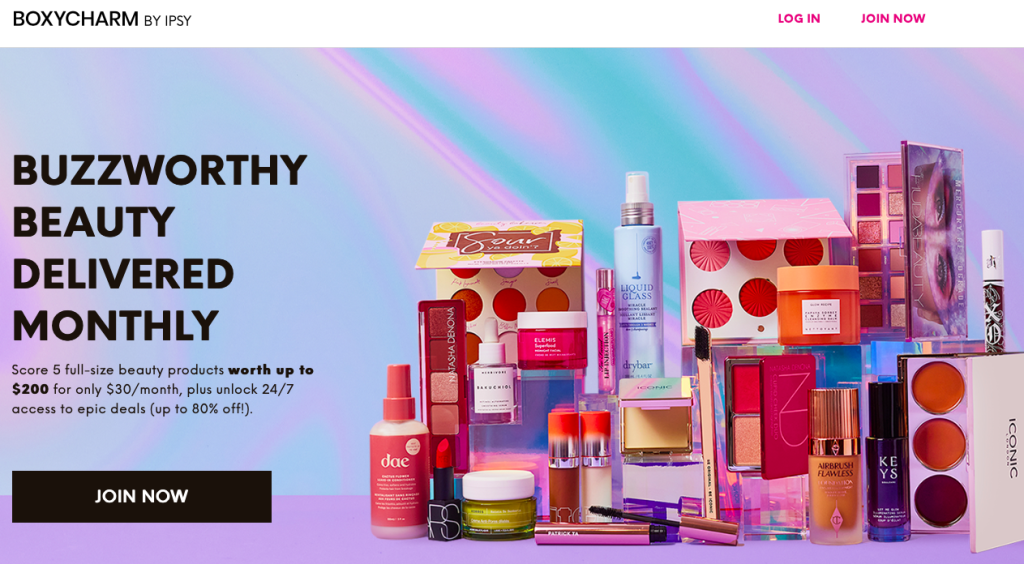
Boxy Charm is a beauty mix and match bundle that offers a mix of products such as cosmetics, wellness, makeup, and grooming. Customers get five products with three items that they can choose. It’s a great example for inspiration for your mix and match bundles for Shopify.
2. FabFitFun
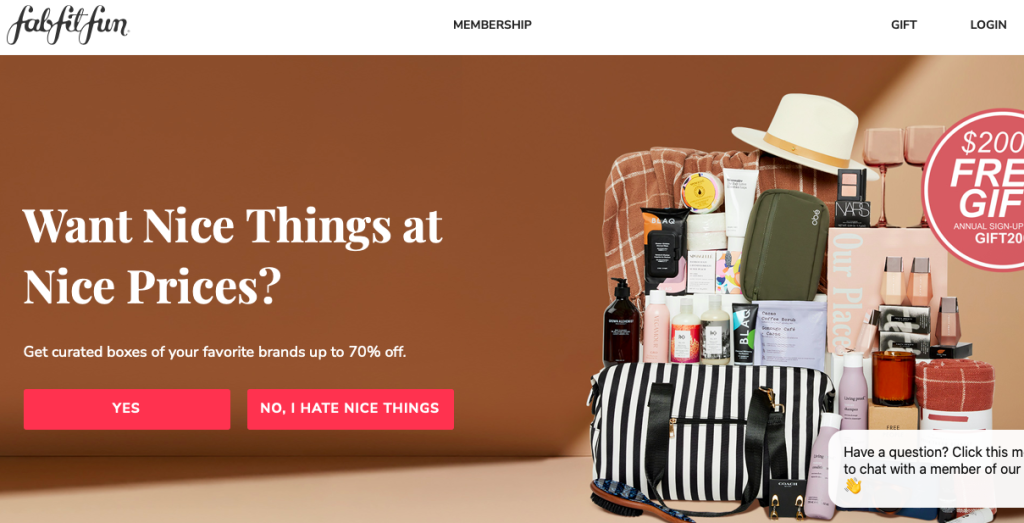
FabFitFun is another mix and match bundle example that allows customers to choose up to four products out of the six. The best part of this bundle is the wide range of fitness, wellness, and home brands that customers can choose from.
3. Huppy
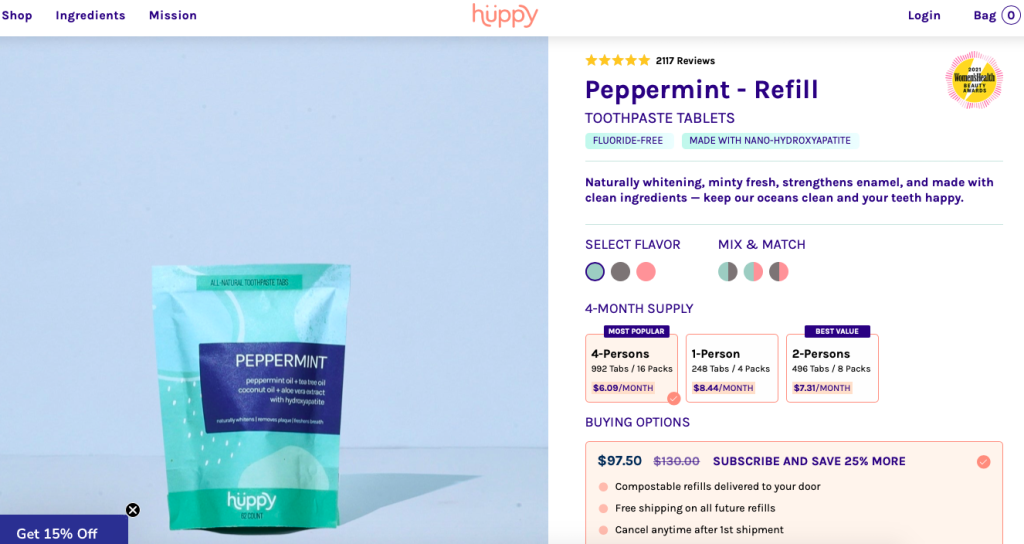
The dental care brand, Huppy, offers bundles of toothpaste tablets. Customers can choose from a variety of bundles of four, eight, or 16 packets.
Frequently asked questions about mix and match product bundles
1. Are mix and match bundles profitable?
Yes, mix and match bundles are profitable when implemented correctly. They help increase AOV, reduce decision fatigue, and increase the value perception, driving higher conversion rates. The key to mix and match bundle profitability is to use the correct pricing strategy.
2. How many products should a bundle include?
Bundles should include three to six products so that it provides enough variety without overwhelming customers with too many choices. However, the number should also depend on your inventory options, profit margins on each product, and your overall bundling strategy.
3. Do mix and match bundles work for Shopify Plus stores?
Yes, mix and match bundles work for Shopify Stores as retailers can leverage advanced bundling apps, automate processes, create custom checkout flows, and API integrations to create seamless bundle flows.
4. Can mix and match bundles be combined with subscriptions?
Yes, you can combine mix and match bundles with subscriptions by integrating a smart Shopify bundles and subscriptions app. This strategy can enhance customer retention and profitability. Moreover, combining these two features can generate insightful customer data that can be used for future sales and marketing strategies.
5. How do bundles affect inventory planning?
To manage bundles, retailers have to maintain enough stock as a stock-out of even one product can make the bundle unavailable to customers. It also requires you to analyze which products are selected together frequently, use past data, and predict future requirements to manage inventory.
Ready to start your mix and match product bundles for Shopify?
We now know mix and match bundles can strategically increase your AOV, help with long-term growth, increase customer satisfaction, enhance value perception, and boost sales.
Not only do you know the benefits, you have actionable steps to implement a robust mix and match bundles strategy on your Shopify store.
Implementing a long-term mix and match bundling strategy requires the right infrastructure.
Meet Appstle. Appstle Subscriptions and Appstle Bundling Apps provide the smart features and system required for your mix and match strategy. It is designed to scale with your business, manage complex personalization, customization of features that make your bundles stand out, and data analytics that can help you with consistent optimization.
We’ve made it super easy for you to get started with your mix and match bundle strategy. You know the benefits are too good to not incorporate this strategy into your business. Besides, we’ve even told you how to get started with nine easy and actionable steps.
Now, all you need is an intuitive tool to help you with setting up and managing your mix and match bundles. Meet Appstle Subscriptions to launch and manage your bundles.