
When sales slow down, most eCommerce stores reach for that one strategy – discounts across the site.
While this ecommerce discount strategy might drive temporary sales, it can often have a negative impact in the long run. Customers tend to stop buying at original prices and wait for sitewide sales.
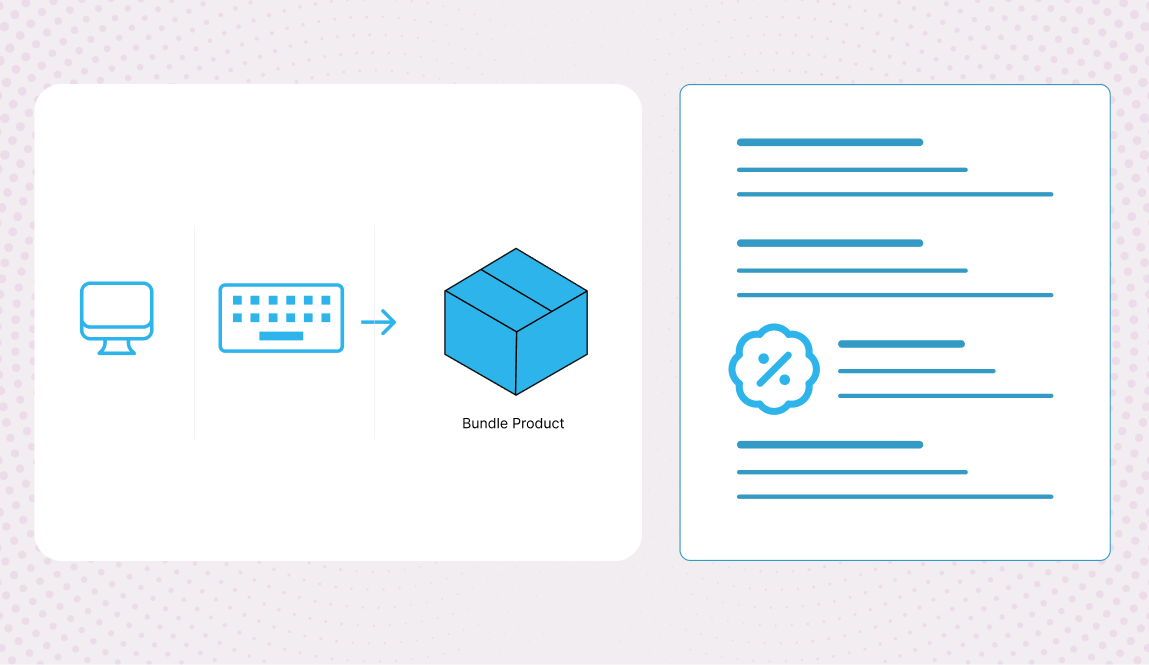
Conversely, discounted bundles, even though offer products at a thinner margin, encourage customers to buy more. Bundles also enable brands to decide which products to offer on discount and how much.
In this blog, we compare bundle discounts with sitewide discounts across metrics. You’ll learn which discounting strategy—bundle discounts vs sitewide discounts—is better for your Shopify store.
Let’s get started!
TL; DR
- Sitewide discounts cut prices on everything equally, fast to launch, but they erode perceived value over time and train customers to wait for sales instead of buying at full price.
- Bundle discounts reward customers for buying more (e.g., “Buy 3, Save 15%”), they tend to raise Average Order Value while letting brands protect margins by choosing which products get discounted.
- Profit margins: Sitewide sales discount every product equally, even high performers that didn’t need it. Bundles let you selectively discount lower-margin items while protecting your bestsellers.
- Inventory movement: Sitewide discounts mostly boost sales of items that were already popular. Bundles can pair slow-moving stock with bestsellers to move inventory more deliberately.
- Customer perception: Frequent sitewide sales can make customers question your “real” price. Bundles reframe the conversation around added value rather than a lower price.
- Ease of use: Sitewide discounts are simpler and quicker to set up. Bundles take more planning (product pairing, thresholds, landing pages) but pay off with better long-term economics.
- Best use cases: Use sitewide discounts for time-bound moments (BFCM, clearance, launches). Use bundles as an ongoing eCommerce discount strategy to grow AOV, protect margins, and increase customer lifetime value.
- Hybrid approach: Many brands combine both, e.g., offering premium bundles during a sitewide sale to nudge customers toward bigger baskets without giving up all their margin.
- Bundles are generally the more profitable long-term strategy, while sitewide discounts work best as an occasional, targeted tactic rather than a default.
Bundle discounts vs sitewide discounts: Understanding the difference
To understand the difference between bundle discounts vs sitewide discounts, let’s begin with the definitions of each of these strategies and how they are different from each other.
What are sitewide discounts?
A sitewide discount is applied to all the products on the site. For example, a 10% discount across the site, or flash sales with a countdown timer, or holiday sales, such as Black Friday, End of Season, etc. Sidewide discounts touch all eligible products, are easy to launch as it requires a single discount code, and it impacts all products equally.
What are bundle discounts?
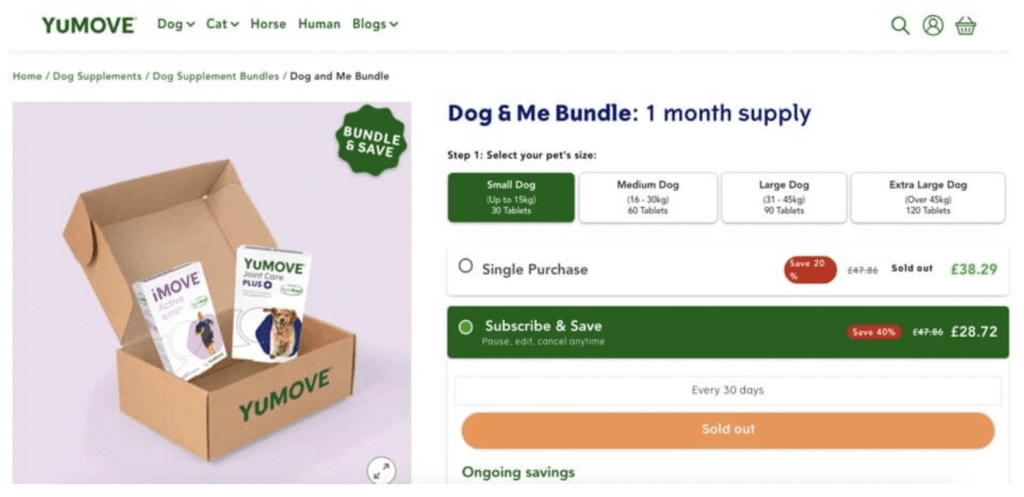
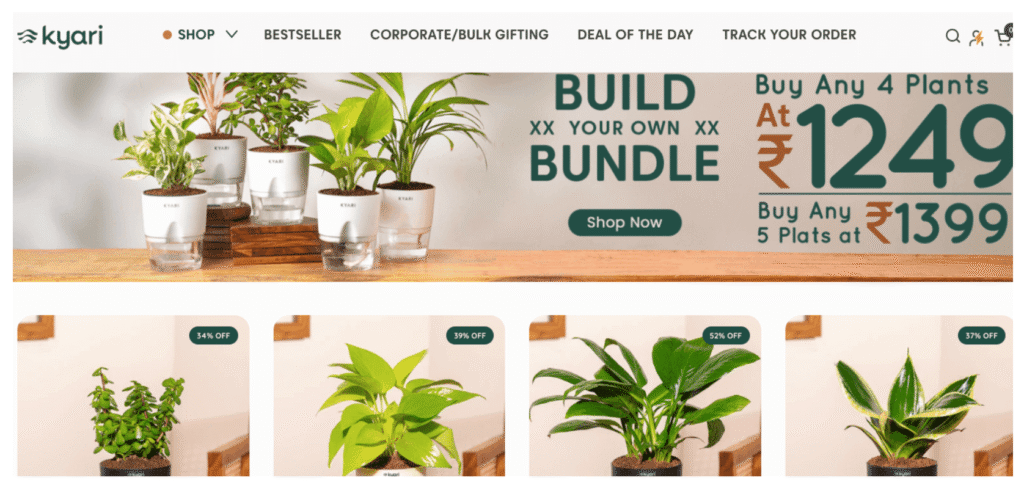
Bundle discounts are offered on a bundle of multiple products, rather than on individual items. For instance, “Buy 3, Save 15%” or starter kits or mix-and-match bundles offered at discounts. For bundle discounts, brands get to choose the products that quality for discounts, and the incentives only unlock when customers add more to their cart.
The main difference is that sitewide discounts make everything cheaper, while bundle discounts make purchases worth it.
Comparing bundle discounts vs sitewide discounts across key metrics
An important process is to measure the metrics that move businesses forward. Measuring metrics helps understand which eCommerce discount strategy fits a given moment.
1. Average Order Value (AOV)
Sitewide discounts: Customers mostly buy what they came to buy. The discount lowers the price of the cart, but it doesn’t necessarily add more products. Customers only get a better price, not more products.
Bundle discounts: The incentive is tied to quantity, for example, buy 3, save 15%. This encourages customers to buy more products to reach the threshold. This increases the number of products as well as the value of their orders.
Bundle discounts tend to increase AOV because it increases the number of products customers buy at one time.
2. Profit margins
Sitewide discounts: Every product is sold at the same discount, regardless of its margin. A high-margin hero product and a low-margin loss-leader are discounted equally, which means the brand is giving away profit on items that didn’t need to be discounted at all.
Bundle discounts: You can control which products are eligible for bundling, hence, it’s possible to build bundles that have higher-margin items, or that only apply a discount once a certain volume is reached. This allows you to be strategic instead of a blanket discount.
Bundle discounts provide control over which SKUs are discounted, and by how much. This helps protect margins.
3. Inventory movement
Sitewide discounts: Typically, under sitewide sales, bestsellers tend to do well. These are the products that are already favorites and hence, sell easily when discounted. And so, slow-moving inventory rarely benefits.
Bundle discounts: Bundles create opportunities to pair a slow-moving product with a bestseller, or to promote complementary items that wouldn’t sell well on their own. This turns bundling into an inventory management tool, not just a pricing tactic.
Bundle discounts can be designed around products that actually need to move.
4. Customer perceived value
Sitewide discounts: When you offer a discount on everything, over time, it may change customers’ perceived value. If it’s often on sale, is the original price even real?
Bundle discounts: For bundles, you can send a different message, which lets customers know they’re getting more. This makes them think about the added value of the extra products in the bundle.
Customers often perceive bundles as offering higher value rather than lower priced products. Such value creation helps in building brand equity; quite opposite of what price reduction does, no wonder in bundle discounts vs sitewide discounts, bundling wins.
5. Operational simplicity
Sitewide discounts: Sitewide discounts have a single discount code, and hence, are easy to launch. One pre-set automatic percentage off at checkout, can be live across the entire store in minutes.
Bundle discounts: Bundle discounts require more planning, deciding which products pair well, setting thresholds, testing bundle logic in the store, and often building dedicated bundle landing pages or “Frequently Bought Together” widgets.
Sitewide discounts are easy and fast to implement compared to bundle discounts.
When do sitewide discounts make sense?
Whether you should use sitewide discount or bundle discount depends on your goals and what you’re using it for. For instance, sitewide discounts do well when you connect them to an event on the calendar. BFCM is a good time because customers are looking for deep discounts.
Another time to offer sitewide discounts is during end-of-season clearance sales, and when you want to move the inventory. Also, at times when you want to acquire new customers. Another time to implement it is when you want to phase out a product before a relaunch.
In each of these cases, the sitewide discount is solving a specific, time-bound problem, not functioning as an always-on growth strategy.
When do bundle discounts make sense?
Bundle discounts work well when brands want to build a more profitable sales pattern over time. Bundles increase AOV and also improve product discovery across the catalog. With bundles, you can cross-sell complementary products, and protect profit margins.
Bundles increase revenue through each and every customer, not just per transaction. Moreover, bundles make it easy to launch new products alongside bestsellers, which encourages larger purchases.
7 reasons bundles generate higher profitability
Here are 7 ways in which bundles can help your Shopify store generate more profit.
1. Customers buy more products per transaction
Bundles have more than just one product – two, three, five or more. Bundles are designed on the principle of buying more and getting more price benefits, as well as value. Thus, the average profitability per transaction increases.
2. Discounts are applied more strategically
With bundles, you can protect margins on certain products and choose which products to offer on discount. For instance, you might not want to offer heavy discounts on your hero products. Conversely, you can apply discounts on lower-margin products.
3. Bundle discounts improve product discoverability
Bundles make it easy for you to introduce new products to customers. For example, add a new product at a heavy discount in the bundle. Or, add a trial pack; for example, a new shampoo. Customers might never buy these new products individually, but as part of bundles, they’re easier to sell.
4. Bundles reduce dependence on deep discounting
Another reason bundles generate higher profitability is because bundles shift the customers’ attention from the discount to the value offered by the bundle. Instead of price cutting, bundles create value.
5. Bundles increase cross-sell revenue
Cross-selling is a key strategy for increasing sales and revenue. When brands recommend “Frequently bought together” products, these cross-sells feel more like convenience as the products are already naturally purchased together.
6. Bundles help move slow inventory
You can improve your inventory efficiency by combining slow-moving products with bestsellers in bundles. You don’t have to resort to a clearance sale kind of strategy by giving sitewide discounts.
7. Bundles can increase customer lifetime value
With bundles, you can introduce a broader set of products to customers. This can lead to more repeat purchases over the years because customers now have more reasons to come back to your store.

Hybrid strategies: Combining bundles and sitewide discounts
Many successful brands don’t rely on just one strategy. Rather, they combine both, applying each where it’s most relevant. Instead of answering the question of which strategy—bundle discounts vs sitewide discounts—is better, let’s look at some examples of how to combine the two.
- Sitewide sale + premium bundle offers: The bundle offers a better effective discount than the sitewide rate, nudging customers toward higher basket sizes even during a broad sale
- Bundle-specific incentives during BFCM: Layering bundle logic on top of a seasonal moment.
- Tiered promotions: Strategies such as “spend more, save more” blend the simplicity of a sitewide structure with the basket-growth incentive of bundling.
- Bundle-first merchandising: Where bundles are the default way products are presented, with sitewide sales reserved for occasional, clearly bounded events.
The goal of a hybrid approach is to capture the acquisition and urgency benefits of a broad sale while still protecting margin and basket size wherever possible.
Metrics to measure before choosing a discount strategy
The best way to design your strategies is to plan them around customer data. Here are some key metrics to measure:
- Average Order Value (AOV): Is the cart growing, or just getting cheaper?
- Gross Margin: what percentage of revenue is actually being retained?
- Units Per Transaction: are customers buying more items, or the same amount for less?
- Bundle Attach Rate: What percentage of orders include a bundled product?
- Conversion Rate: Is the offer actually driving more purchases, or just discounting existing ones?
- Customer Lifetime Value (CLTV): Are these customers coming back, or are they one-time discount shoppers?
- Inventory Sell-Through Rate: Is the promotion actually clearing the products it needs to?
Bundle discounts vs sitewide discounts: Which strategy should you use?
Sitewide discounts can help you with short-term sales, for example, BFCM or end-of-season sales. But using it as your only strategy can do more harm. Customers tend to prefer waiting for sitewide sales rather than purchase products at original prices.
Bundle discounts are based on a more thought-through and deliberate approach, where customers buy more. In bundles, value becomes more important than discounts. For instance, convenience of buying a set of things together, getting complementary products together, and buying combinations that are most often bought together by customers.
In most cases, bundles are winners. If you’re looking to set up an effective eCommerce bundle strategy on your Shopify store, you will require a smart app such as Appstle Bundles & Upsells.
Key features of Appstle Bundles & Upsells App:
- Create, manage and customize bundles
- Set discount options based on data
- Choose from different bundle types, such as classic, combo, advanced
- Upsell with multiple discount types
- Integrate subscriptions into bundles
Install Appstle Bundles & Upsells App in your Shopify store today.