
Subscriptions have taken over every industry. Brands selling products and services are offering subscriptions. However, with increasing competition in the subscription market, increasing conversion rate has become harder.
But there’s one strategy that has potential to increase eCommerce subscription conversions — free trials.
In this blog, we explore how free trials help with eCommerce customer acquisition, its pros and cons, how to set up an effective free trials structure for your subscription business, and more.
Let’s get started!
TL;DR
- Free trials can lead to subscription conversions, when done right.
- Free trials for subscriptions help reduce risk perception, demonstrate value, build trust, and enable data collection, which has a positive effect on eCommerce subscription conversion rate.
- Free trials have some drawbacks, such as operational complexity, lower perceived value of free things, and conversion timing pressure that could negatively impact conversion rate.
- A successful free trial strategy involves a strategic structure with premium-feature access, a smooth onboarding experience for customers, continuous engagement tactics, a psychology-driven design, and A/B testing for features and flows.
- To design and set up a free trial strategy for subscriptions requires the integration of a smart tool such as Appstle Subscription App, enabling subscription conversions with multiple key features.
What are eCommerce subscription free trials?
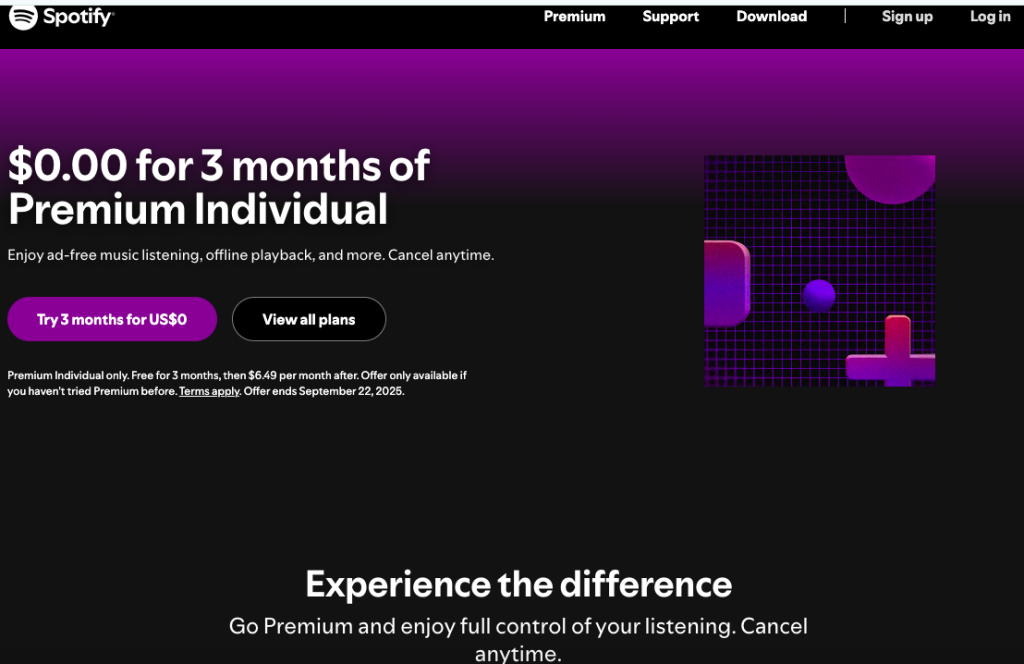
You might have come across free trials when exploring a new product or service. For example, Spotify, software solutions (Canva, ChatGPT) have free trials of their premium plans, etc. Free trial is a subscription marketing tactic that allows brands to offer their services, or some of the services for free. Free trials are typically for a fixed duration, such as a week, 15 days or 30 days. Customers can choose to sign up for paid subscriptions after the free trial period ends.
Free trials for eCommerce subscription conversion
pros and cons
Free trials have many benefits as well as disadvantages for eCommerce brands. While free trial helps drive eCommerce subscription conversions, at times, it can also deter customers from signing up. Let’s look at its pros and cons.
Subscription free trial pros
1. It impacts customer psychology
When customers have the option of a free trial before signing up, it removes the risk element, making it easy for them to do a trial of the new service. The psychological safety factor is beneficial for brands when targeting high-value subscription plans, launching complex software that requires initial learning, and services competing against market competition.
2. Brands can demonstrate value
Unless customers try, they will not know how good your product/service is. With free trials, you can demonstrate your product’s true value. When customers try your product, they can compare its features with what they read in the marketing material. Moreover, they can experience the user interface and know how your product can resolve their problems. Free trial is a strategic pricing tactic that helps you enhance customers’ perceived value of your subscription plans.
3. Help with building trust
When customers have free trials and like the product, it helps build trust and confidence in the brand. Many times, this can lead to social proof for the brand. For instance, the customer sharing a video of their free trial. Besides, customers might also bring word-of-mouth referrals, increasing subscription conversions for eCommerce brands.
4. Data collection and personalization
Apart from direct subscription marketing, free trials also help with data collection. By offering free trials, brands can gather customer data, specifically, behavioral data. This data and insights can be used to create personalized onboarding experiences and targeted campaigns for marketing. Additionally, brands can also use data for product improvements.
Subscription free trial cons
1. Misuse of free trial
Not all people who take free trials are genuine. Some may repeatedly use the free trial offer using different names and email ids, some may use the free trial just for research purposes, and some may take all the benefits of free trials but never convert. This is one of the biggest subscription free trial strategy drawbacks.
2. Operational complexity
Free trials can add to the operational costs. For instance, brands with tiered subscription models have to offer customer support, incur infrastructure costs, spend on fraud management and prevention, and process payments, among other processes, to each tier. This increases operational complexity.
3. Lower value perception
It is human psychology – we perceive free things as being of low value. This can impact customers’ decision to sign up for subscription plans. Also, free trials can make it difficult for brands to justify premium pricing.
4. Conversion timing challenge
Free trial periods are often for a limited time. This can lead to the feeling of urgency or rushed decision-making for customers. Customers may not be ready to make sign-up decisions within the specified time.
How to set up effective free trials for eCommerce subscription conversions
Setting up an effective subscription free trial strategy is key to driving conversions. Here is a step-by-step guide for your Shopify subscription business.
1. Define your objectives
When setting up free trials for your subscriptions, create a strategic plan from the start. That begins by defining your subscription goals. For instance, if your goal is to educate your target audience or is it to drive conversions? Based on this, you will set up metrics to measure, such as conversion rate, customer lifetime value, and churn rate, etc. Your goals will also define your target audience – new customers/markets, or existing customer base.
2. Define free trial structure
Define the structure of the free trial. It is essential to have clarity of the structure if you want to maximize eCommerce subscription conversions. Here are the factors you must decide upon:
- Set the time limit for free trial – 7, 14, or 30 days
- Decide feature access for free trial
- Usage based trial – access until a specific threshold
- Hybrid structure – combine time and feature limitations
3. Set up account management
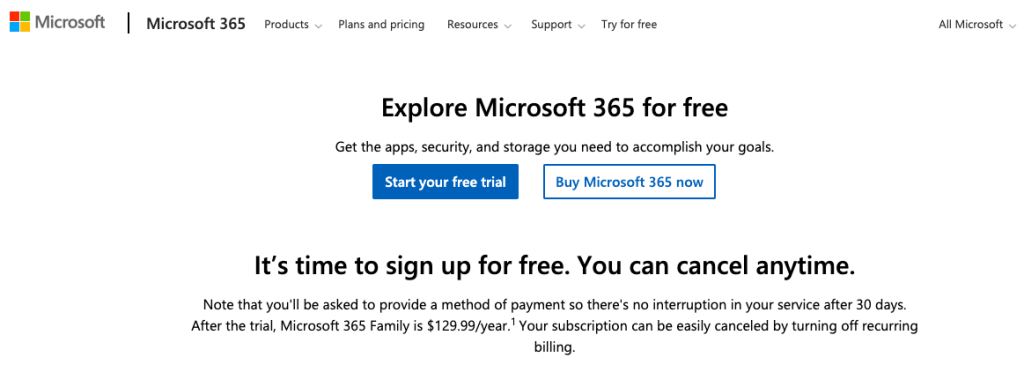
Decide the account management system. This step is critical as it directly impacts your Shopify conversions. Ensure the sign up process is easy, including social login, and a short form. Also, indicate trial period status on different pages and throughout the customer interface. By setting up automated billing transitions, you can increase conversions. Use a smart tool such as Appstle Subscription app to set up and manage subscriptions.
4. Optimize onboarding
After the sign up process, the next important step in the onboarding. It’s the stage where you can set the foundation of your relationship with customers. Here are some tips to follow:
- Share different features one by one
- Engage them with guided tutorials and interactive walkthroughs
- Introduce milestone-based engagement campaigns
- Integrate systems to flag low engagement so you can work on further optimization
5. Set payment systems
Another critical aspect that impacts eCommerce subscription conversions is the payment infrastructure. A few features you will have to decide on are whether you want a pre-authorization or post-trial billing system, choose the different payment methods and support required, considerations for international pricing and currency, and subscription management and modification features.
6. Conversion optimization
When you run free trials, you have to ensure customers end up liking your product and there are maximum conversions. Here are a few ways to do so:
- Identify the moment when free trial users notice value in your product
- Collect that of user behavior to gain insights on actions that lead to conversions
- Design your onboarding flow in a way that it drives actions you want from users
- Offer personalized recommendations based on user profile
7. Continuous engagement
Once your customers are onboarded, it’s time to ensure they remain engaged with your product, are curious, and want to discover more of it. How do you do that? Introduce your product features progressively one by one throughout the trial period. Regularly communicate with them, for example, ask them if they require help. Additionally, keep sharing educational content with them and provide them access to communities and peer groups you’re created.
8. Run subscription conversion campaigns
To drive more conversions, consistent effort is a must. Try these conversion strategies:
- Run conversion campaigns on multiple channels – email, SMS, WhatsApp, etc.
- Focus on demonstrating value through your messaging, not discounts
- Create urgency without pressurizing customers
- Offer personalized incentives based on customers’ usage patterns
9. Run A/B tests
To ensure your systems align with customer preference and lead to more conversions, run A/B tests. For instance, try different trial periods and identify which trial periods lead to more conversions. Also try out different onboarding sequences, for example, guided and automated. Another test you could run is to share credit card details and without sharing. You can also test different communication timings to identify which brings more conversions.
Conversion psychology: why free trials work for subscriptions?
Offering free trials for subscriptions impacts customer psychology in many different ways. From reciprocity principle to endowment effect, here are some ways in which free trials affect human psychology and drive conversions.
1. The endowment effect
People who engage in free trials of products and services, often integrate them into their workflows. This makes it difficult to stop or discontinue using it. The result? Discontinuing might seem more like a loss than as avoiding a purchase. This is endowment effect psychology, where people value something more if they own it.
2. Social proof and commitment consistency
When free trial users share about their experience on social media or customize the product, it strengthens their commitment, increasing the likelihood of conversions. Also, when the free trial involves others (for example, a work team), it increases conversion potential.
3. Loss aversion psychology
Once we try something that seems to be working well, we often fear losing those set workflows, data, and settings. This need for not losing access leads to more conversions.
4. Reciprocity principle
It is human nature – once we agree to take something free, we feel obliged to make the purchase and convert. When you offer a free trial, it leads to a psychological willingness to buy the subscription.
Ecommerce subscription conversions example
Let’s understand how free trials increase conversions with an example from the subscription industry.
An e-learning subscription platform offered professional development courses. The platform offered a free trial with limited features for the duration of 30 days. Even though the platform saw high signups for the free trial, it failed to lead to higher conversion rate.
The brand decided to run an A/B test with a different free trial structure. In the other structure, the brand offered a free trial for a shorter duration (one week) and access to all its premium features.
The result: The platform saw a higher conversion rate in the second structure, which was for a shorter duration but with all its premium features.
Takeaways:
- Customers perceive higher value in premium subscription plans that have advanced features
- Longer duration free trials do not always lead to more conversions. They may have a reverse effect on conversions, making customers take undue advantage of the free service
Summing up: free trials to increase eCommerce subscription conversions
Do free trials increase trial to paid conversions? Yes, they do, provided the subscription free trial strategy is well defined and planned. In this blog, we’ve discussed how you can drive more conversions through free trials.
However, to ensure your free trial strategy functions smoothly, you will require a smart partner, such as Appstle Subscriptions App.
The app is designed to help you set up and manage subscriptions, including free trial plans. The app allows different types of subscription plans, easy subscription management, billing and payments, customization, and other features.
Install Appstle Subscriptions App on your Shopify store today!