
Rental fashion subscription models are on the rise. Customers love the variety, convenience, and cost benefits. And brands create recurring revenue from quality investments, enhance loyalty, and increase retention.
And there’s a lot you can do with your fashion subscription business model. The more strategically you design the subscription structure, the more the ROI.
In this blog, we look at 7 strategies to drive recurring revenue from your apparel subscription service.
Let’s get started!
Key ideas in this article
- Access over ownership: Let customers rent high-ticket items for a fraction of the purchase price. Lower entry barriers convert hesitant buyers into loyal subscribers.
- Rotation-based wardrobes: Monthly item swaps keep the experience fresh and create a natural engagement loop that reduces churn.
- Tiered plans: Offer 2–4 tiers differentiated by item count or delivery frequency. Let subscribers self-select and upgrade as their usage grows.
- AI or stylist personalization: Use onboarding quizzes and style profiles to match items to individual preferences. Personalization builds switching costs no discount can beat.
- Inventory utilization: The same item can be rented 20–30 times, generating 3–4x its purchase cost. Invest in quality, maintain well, and resell when retired.
- Occasion-based curation: Map your catalog to events and seasons. Curated edits for weddings, holidays, and parties make your subscription feel essential, not optional.
- Novelty and variety: Regular new arrivals, seasonal drops, and designer collabs keep subscribers discovering something new — and give them a reason to stay.
7 rental subscription model strategies to increase recurring revenue
Here are seven strategies to implement in your Shopify fashion subscription business to keep your subscriptions active, alive, and fresh.
1. Access over ownership model
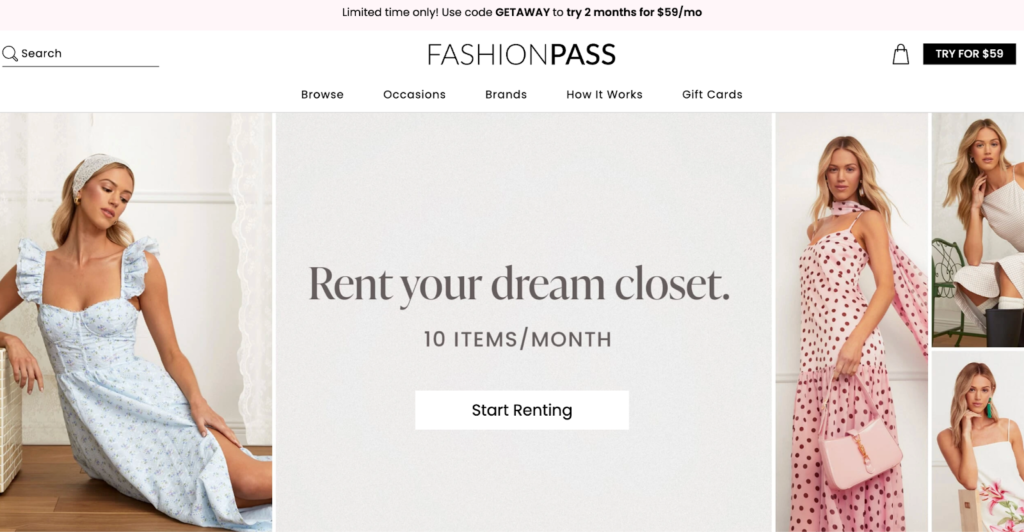
In rental models, customers don’t spend a huge amount buying and owning products. They just spend a small amount for access to a product for a short time.
In the fashion industry, rental businesses are focusing on maximizing “garment utilization rates”. This means, each item gets used multiple times, at least 20 times.
The concept shifts from ownership to access. This model works specifically well for fashion. Here’s why:
- Renting for a small price is smarter than buying for a significant price
- Customers don’t have to be stuck with a product, they can keep changing
- For brands, this means predictable monthly revenue and profits
For instance, instead of buying a dress for $1000, customers pay $80 to rent it. If 20 customers rent it, the brand earns $1600 on a dress worth $500.
Here’s how you can apply a rental fashion subscription model to your Shopify store.
- Lower the entry cost by selling access, not ownership
- Ask if there is a high-ticket product in your catalog that customers want but hesitate to buy
- Create a subscription model, for example, rentals, rotating kits, or trial-first models
- Convert hesitant visitors to committed subscribers
2. Rotation-based wardrobes
Most subscription businesses face the challenge of boredom. Customers getting bored of the same products. But in clothing rental subscriptions, this is not the case. Brands can solve the boredom problem with rotation mechanics.
Here’s how it works:
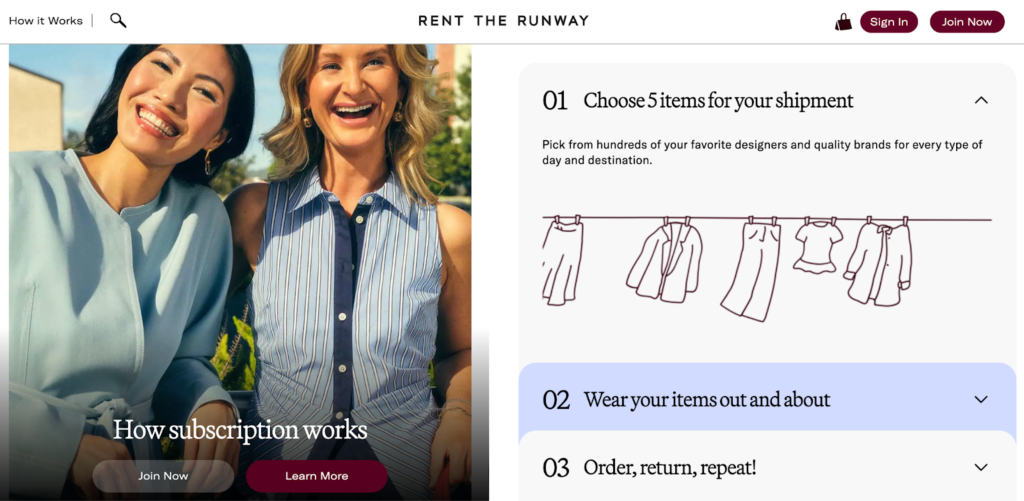
- Subscribers swap their products every month or every quarter
- This keeps the experience fresh with new products
- Subscribers can hold a certain number of products at a time and swap when they are ready to. A study shows subscribers like to keep 4 garments at a time
- The rotation also creates consistent, natural engagement
Here’s how you can apply the rotation-based subscription model in your Shopify store.
- Integrate rotation into your subscription model
- Swap- or rotation-based models keep subscribers engaged
- Create experiences with the elements of newness and discovery
3. Tiered subscription plans
The potential to create tiered rental fashion subscription models is high. You can create tiers based on various factors, such as: the number of items subscribers can hold at once, or the number of shipments per month, or product categories they can access.
Here are some tier examples:
- Basic tier: 4 items per month at $80
- Essential tier: 10 items per month at $160
- Premium tier: Unlimited items per month at $ 250
How to apply tiered subscription plans in your Shopify store.
- Allow customers to select the tier that meets their lifestyle needs, budget, etc.
- Allow subscribers to upgrade to higher or lower tiers when they want to
- Create 2 to 4 tiers, making the entry-level tier easy and enticing
4. AI or stylist-led personalization
Generic subscription boxes are not enough. A study shows 71% of consumers expect personalization from brands, and 76% get frustrated if it doesn’t happen. Fashion has a high potential for personalization. Recommending products based on individual style preferences can make customers feel special.
Here are some personalization ideas for rental fashion subscription model:
- Use AI algorithms or in-house stylists to personalize subscribers’ boxes
- Consider body type, style profile, and past rental history
- Consistently collect and analyze data as fashion trends and preferences keep changing
Here’s how to apply this to your Shopify subscription model:
- Run a short quiz during onboarding
- Feed customer preference data into your Shopify recommendation engine
- Create a style profile for each subscriber and keep updating it from time to time
5. Inventory utilization optimization
Fashion subscription business models, when designed well, can be financially powerful. Here’s how: Subscription businesses can rent the same products over and over again, and increase the returns from the investment. A garment purchased for $500 can be rented out 20 to 30 times and generate three or four times its price.
Here’s what brands do:
- Invest in high-quality, premium clothes and accessories
- Maintain the products and hold up the inventory for a long duration
- Actively promote and market the catalog to generate more rentals
- Track and monitor performance of products and optimize
Here’s how you can implement this strategy in your Shopify store:
- Invest in clothing and accessories that can have a long life
- Refurbish and recycle old products
- Resale old products at a discounted rate
- Create a secondary market for well-loved products
6. Occasion-based curation
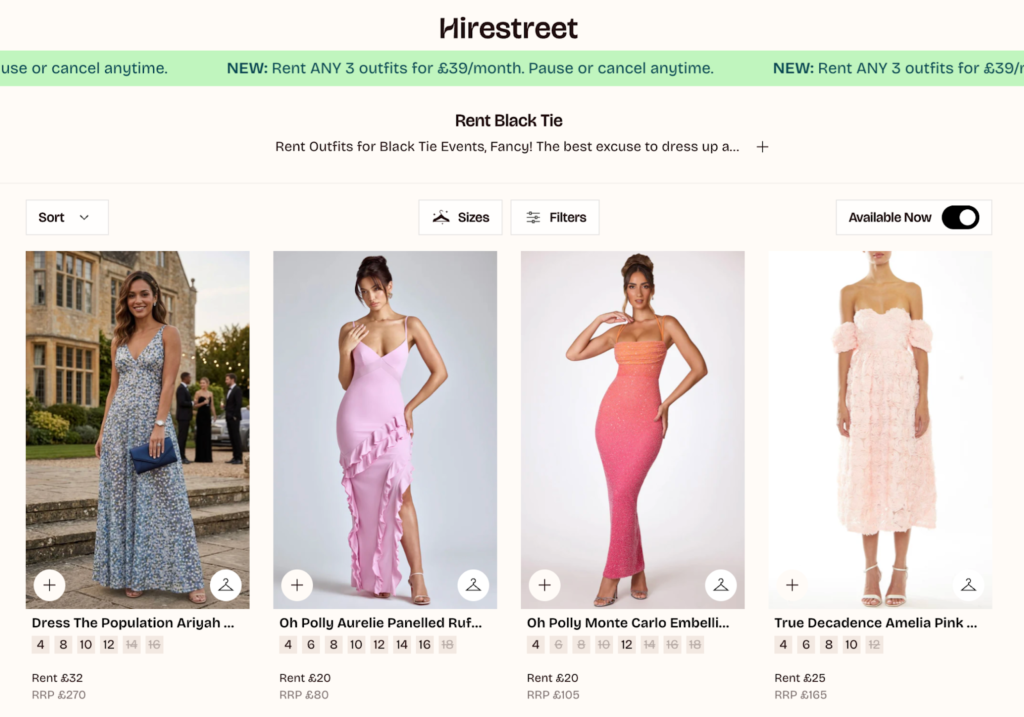
Apparel subscription services can also be designed around occasions. For instance, weddings, summer holidays, parties, black-tie events, etc. This transforms it from a fashion subscription model to a solution that solves customers’ specific needs.
Subscription brands can create campaigns around specific seasons to promote rentals. When there are multiple special occasions and events, for subscribers, the rental format becomes convenient and cost-effective.
Here’s how you can design an occasion-based curation for your fashion rental subscription model.
- Map your product catalog to occasions and seasons
- Create curated edits around those occasions
- Market these curations prominently
7. Retention through novelty and variety
One of the biggest reasons subscribers cancel subscriptions is because of monotony, repetition, and lack of variety. But fashion rentals have an advantage. With changing fashion trends, brands can keep their catalogs updated and fresh with the newest collections.
Here’s what subscription brands can do to increase retention:
- Refresh catalogs regularly with new arrivals
- Limited-edition pieces
- Designer collaborations
- Introduce seasonal drops
- Integrate moments of discovery into the model
How can Shopify subscription brands implement this strategy?
- Create a “new arrivals” structure into the subscription experience
- Give subscribers something to discover every time with new products, new curation, new content, new features, etc.
- Create communication campaigns using email, push notifications, social media, etc.
Set up a rental fashion subscription model on your Shopify store
Clothing rental subscriptions are not just renting clothes, they are building loyalty through strategically designed subscription plans. For instance, the access model lowers the entry barrier, the rotation model creates habit, and tiered structures enable growth.
To set up a fashion subscription, you need a smart subscription app, such as Appstle Subscriptions. The app is designed to help brands set up a robust foundation, and manage the subscription business with built-in features and integration capabilities.
Install Appstle Subscriptions App in your Shopify store today!