Almost every eCommerce brand gives reward points. It is one of the most common retention tactics. However, retention requires more than just points. Think subscriptions, memberships, bundles, and more.
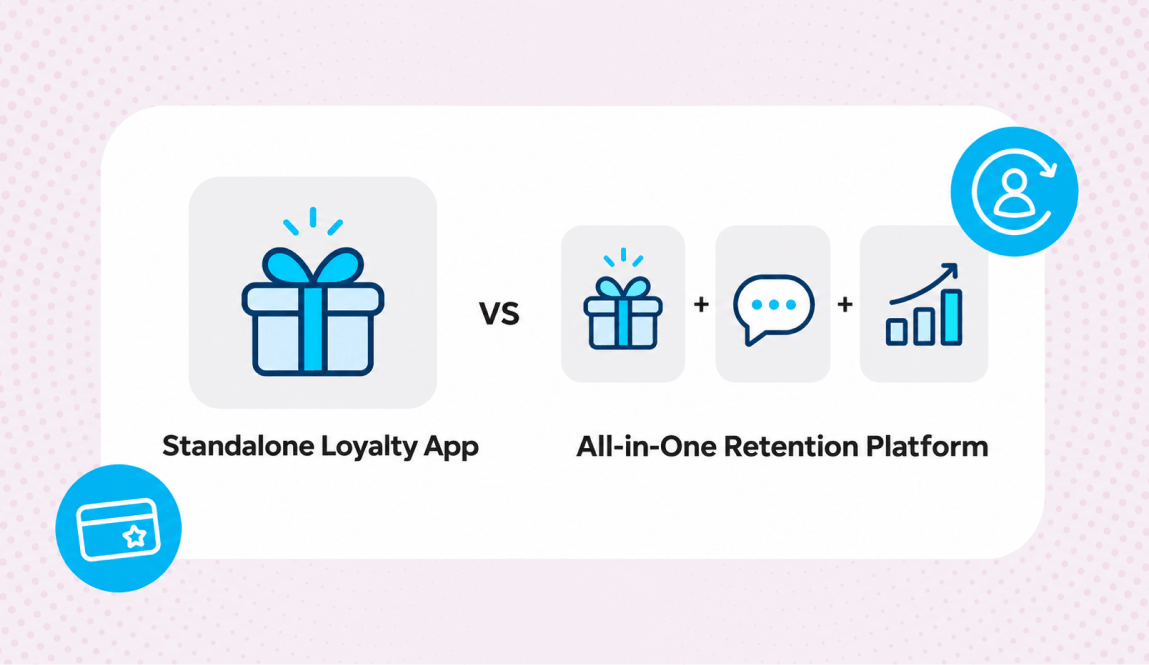
While standalone loyalty features such as points, rewards, referrals, and VIP tiers are one way to increase customer retention, the other way is to integrate all-in-one eCommerce retention platforms.
All-in-one platforms have multiple retention capabilities, such as loyalty, subscriptions, memberships, and bundles. But an all-in-one platform is not required for all businesses.
It is important to ascertain what kind of tool or platform your business needs – a standalone loyalty tool or an all-in-one retention platform.
In this blog, we explore standalone loyalty apps vs. all-in-one retention platforms, and help you understand which one is right for your Shopify store.
Let’s get started!
Standalone loyalty app vs all-in-one retention platform: 7 factors to consider before choosing
When deciding what kind of Shopify customer retention app you must invest in, consider these seven factors to choose between standalone loyalty app vs. all-in-one retention platform.
1. What is your primary retention objective?
One of the first things to start with is your problems or challenges. Understand what problem you want to solve with the app or the platform. Is it to turn first-time buyers into repeat customers or increasing repeat purchase frequency? Or do you want to focus on increasing average order value (AOV)?
Different problems require different customer loyalty software. For instance, if you’re only trying to improve loyalty, a standalone loyalty app may be sufficient. But if you’re tackling multiple challenges, you may require a broader platform.
Here’s how to narrow down your understanding.
Gather data from the last 12 months. Analyze it: the number of customers who place second orders, the time between first and second orders, and the revenue generated from new and returning customers. The weakest data from these three could be your retention problem.
However, if you identify only one issue, one focused tool can help; but for two or more issues you might need a broader strategy and a platform to manage it. Let’s look at some loyalty related challenges and what works best – a tool or a broader platform.
| Challenge | Solution |
| Low second-order rate | Points to early-engagement gap. Try welcome rewards, first-purchase points bonus, offering a reason to return soon. A loyalty tool may be enough for this. |
| Healthy second orders but long gaps between purchases | The product is replenishable, so a subscription or a replenishment reminder will probably outperform points alone. |
| Strong repeat buyers, but flat order value | Bundles, tiered rewards that unlock at higher spend, and member pricing do more than another discount campaign. |
| Subscribers canceling after two or three cycles | The problem is value perception after sign-up. Rewarding tenure with loyalty points per renewal or perks that grow over time can help. |
2. How complex is your loyalty program?
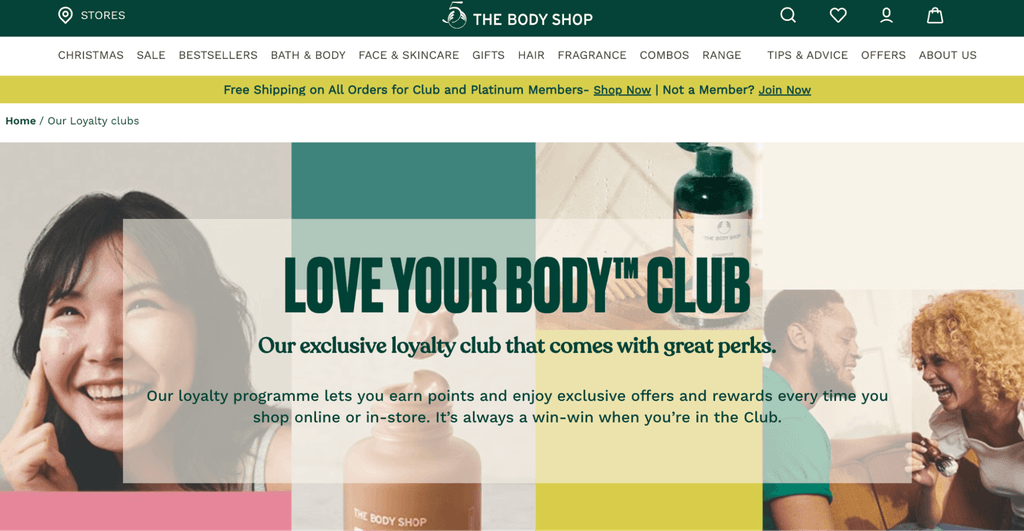
Loyalty programs can be either simple, for instance, ‘earn a point on every purchase’, or they can be layered. Think multiple tiers, custom earning and redemption rules, behavior-based rewards, exclusive member benefits, referral incentives, etc.
Here’s what you can do to evaluate your loyalty program’s complexity level:
Write down a few rules you want your loyalty program to follow. A customer loyalty software that can handle four to five rules without a workaround is usually a good fit. However, be cautious when setting up complex programs, as they can be harder for customers to understand. First, simplify your program, then decide on the tools or platforms.
If your loyalty strategy requires advanced features, it’s best to test if a tool or all-in-one loyalty platform can deliver them. Let’s look at some cases.
| Challenge | Solution |
| Tier logic | Do tiers reset annually, or on a rolling window? Can customers qualify by spend, order count, or both? Can they be downgraded, and is there a grace period? These rules decide how the program performs. |
| Earning rules | Can you give away bonus points on specific collections, during a launch, or for a customer’s first purchase? Can you limit points to protect margin on discounted items? |
| Redemption rules | Can points be redeemed for percentage discounts, fixed amounts, free shipping, and free products? Can they work with other discounts? |
| Personalization | Can rewards differ by segment, such as new or lapsed customers? |
3. Your existing eCommerce tech stack
Next, create an inventory of all the marketing strategies in your Shopify store, such as, subscriptions, memberships, email, SMS, reviews, and upselling. Understand whether or not your loyalty app integrates with them. And will one more app mean added work?
Every additional app can add work, such as updates, permissions, theme conflicts, etc. But that should not be the reason to avoid standalone softwares.
Here’s what you can do to decide between standalone loyalty app vs. all-in-one retention platform:
For each tool, assess what customer data it holds and what data it needs from other software. For instance, typically, a loyalty app needs order data from Shopify, subscription status from subscription, etc. In return, it has to send points balance and tier status back.
| Challenge | Solution |
| Timing | Does a points balance update instantly, or on a delay? A customer who sees an out-of-date balance at checkout loses trust quickly. |
| Edge cases | What happens to points when an order is refunded, a subscription is cancelled mid-cycle, or a discount code is stacked? |
| Ownership | When two tools disagree, which is the source of truth? If nobody knows, your support team will find out the hard way. |
4. Is there a need to connect different retention programs?
Assess if your loyalty program needs to work with retention structures or can it be disconnected from them. For example, rewarding customers for maintaining active subscriptions, offering exclusive discounts to paid members, giving loyalty points on bundle purchases, and granting VIP customers early access to new products.
When retention programs are connected, your customers get more reasons to return. For instance, a subscriber earns points, a member unlocks VIP perks, and a bundle buyer inches closer to the next tier. But when programs are separate, customers have to understand each program individually.
Here’s what you can do:
Pick the connected experiences that are key to your brand. Identify the steps and which customer loyalty softwares are involved in them. If all the steps can be handled by a single platform, it’s good. But if not, you have to build complex systems with multiple tools.
Moreover, when there are separate tools, customers also have to manage and understand more. But with connected programs run by a platform, the process becomes seamless.
5. Total cost of ownership
Another factor to consider when choosing between standalone loyalty apps vs. all-in-one retention platforms is cost. To get a complete sense of cost, consider these factors:
- Subscription fees, usage-based charges, and add-on feature costs
- Integration costs, including developer time
- The time your team spends managing multiple apps
- The cost of maintaining separate customer data and workflows
| Cost category | What to consider |
| Software fees | Base plan, usage tiers (for example, order volume or number of members), and paid add-ons |
| Integration costs | Connector subscriptions, developer time, and any custom work to sync data |
| Operational time | Hours per month spent managing apps, fixing sync issues, and training staff |
| Customer support | Tickets caused by mismatched balances, duplicate emails, or confusing portals |
| Switching costs | Migration effort if you outgrow the tool, and any data you can’t export |
6. Analytics and customer data visibility
Successful loyalty programs depend on data collection and analysis, and how well data insights are utilized. Here are some of the key metrics to track:
- Repeat purchase rate
- Customer lifetime value
- Loyalty program participation
- Reward redemption rate
- Subscription retention and churn
- Membership engagement
- Average order value
Here’s what you can do: Check whether the tool’s reporting is limited to loyalty program performance or it covers other retention activities, too. If the tool covers more than just loyalty program performance, it becomes more useful for strategic decisions, as you can see how loyalty members engage with your other programs. Also check if data can be exported or shared with your existing analytics stack, so that there is more flexibility.
Here are some questions cross-program analytics reporting helps answer.
- Do loyalty members have a higher repeat purchase rate than non-members?
- Do customers who both subscribe and earn points churn less than subscribers who don’t?
- Which program brings in the highest customer lifetime value per customer acquired?
- Are VIP tiers driving higher average order value, or just rewarding people who would have spent that much anyway?
To choose between loyalty tool and all-in-one retention platform, check for these factors:
- Ask whether you can segment customers by program participation, whether reports can be filtered by cohort or time period, and whether data is available through export, API, or a connection to your analytics tools.
- Strong reporting inside the app matters, but so does the ability to get your data out when you need a custom analysis.
- Choose the metrics you will review monthly and make sure your chosen solution can produce them without manual work.
7. Scalability and future requirements
To decide between standalone loyalty app vs. all-in-one retention platform, assess this: will your current choice meet your Shopify customer retention requirements after a few months or years?
For instance, will the tool help when you introduce subscriptions, paid memberships, VIP programs, or bundles? Can it handle more complex workflows and customer segments as your business grows? What are the migration options if you outgrow it, and how easily you can export customer and points data? What API access, customization, and technical support are available?
When choosing, think in stages. Here are some tips:
- Launch stage: One goal – get customers to buy a second time. A simple points program is often enough.
- Growth stage: Repeat rates improve, and you start looking at recurring revenue through subscriptions, and at raising order value through bundles.
- Maturity stage: You want to recognize and retain your best customers with VIP tiers, memberships, and exclusive access, and you need to measure the whole system together.
Before you zero in, find out what happens to customer data and points balance if you migrate to another tool or platform. Figure out if there is an API or webhook support for custom workflows. Also evaluate if you can add subscriptions, memberships, or bundles later without replacing what you have already built.
Tip: Pick an option that supports your needs today and has the potential to meet what you may need in future.
When should you choose a standalone loyalty app?
To decide between standalone loyalty app vs. all-in-one retention platform, let’s understand when a standalone loyalty tool is better:
- Your primary objective is to launch or improve a points-based loyalty program. The focus is loyalty, and you want a tool built around it.
- You need advanced loyalty-specific functionality. Complex tier logic, nuanced earning rules, or deep referral mechanics may be better served by a specialist.
- Your existing retention tools already work well together. If your subscription, email, and review stack is stable and integrated, adding a loyalty app can be straightforward.
- You want the flexibility to choose specialist vendors for each function. Some teams prefer best-of-breed tools and are comfortable managing the connections.
- You don’t currently need subscriptions, memberships, or other retention capabilities in the same platform. If those aren’t on your roadmap, there’s little reason to pay for them.
- Standalone is a good way to start when your brand is small.
When should you choose an all-in-one eCommerce retention platform?
Here’s when an all-in-one tool makes more sense:
- To manage multiple retention programs within a connected ecosystem – loyalty, subscriptions, memberships, and bundles.
- To introduce, subscriptions and memberships alongside loyalty. The earlier you build these on a shared foundation, the less you will need to rework later.
- To connect rewards and experiences across different purchase models. Points for subscribers, perks for members, and bundle incentives all need to talk to each other.
- Managing multiple apps and integrations becomes operationally complex.
- You want to simplify your tech stack while keeping visibility into different retention activities.
How to build a connected retention strategy with loyalty, subscriptions, and memberships?
Now let’s learn how to build a connected retention strategy by bringing together loyalty, subscription, membership and bundles.
| Loyalty | Subscription | Membership | Bundle |
| Reward purchases, referrals, engagement, and repeat buying. They make every interaction feel worth something. | Encourage recurring purchases through convenience, replenishment, and subscriber-exclusive incentives. | Offer exclusive pricing, access, perks, and experiences to high-value customers. | Encourage customers to purchase complementary products and increase product value. |
Let’s understand how to connect these different retention strategies through a practical example. A skincare brand sells cleaners, serums, moisturisers, and SPF. Here’s how the brand can build a connected experience.
- Subscriptions for replenishment: Skincare is used daily and runs out regularly, so a customer subscribes to their cleanser and moisturiser on a regular cycle. They save a little and never run out.
- Loyalty points for repeat purchases: Every order, subscription renewal included, earns points. Reviews and referrals earn extra. Points can be redeemed for discounts or store credit.
- VIP membership tiers with exclusive benefits: Customers who reach a spending or engagement threshold, or who pay for membership, unlock early access to new launches, member pricing, and bonus points.
- Curated bundles for different routines. An “Acne-Prone Starter Routine” or a “Hydration Reset Set” packages complementary products at a considered price, raising order value and giving new customers a clear starting point.
How Appstle helps Shopify brands manage multiple retention strategies
Appstle provides a Shopify customer retention app suite designed for merchants to run different retention strategies side by side, rather than treating every customer relationship as a standalone loyalty program. Here are Appstle’s products:
- Appstle Loyalty & Rewards: For points, discounts, store credits, and personalized rewards. It enables repeat-purchase incentives and recognition.
- Appstle Subscriptions: For recurring orders, flexible billing, and subscription management. It supports replenishment and predictable repeat revenue.
- Appstle Memberships: For tiered plans and exclusive member benefits. It helps brands build paid or tiered programs around perks and access.
- Appstle Bundles & Upsells: For fixed and flexible product bundles. It encourages larger baskets and product discovery.
Standalone loyalty app vs. all-in-one retention platform – choose for your Shopify strategy
Whether you should choose a standalone loyalty app or an all-in-one retention platform, depends on your Shopify store’s strategic requirements.
To recap, a standalone loyalty app is suitable when loyalty is your core strategy, and an all-in-one eCommerce retention platform is best when you want subscriptions, memberships, bundles, and loyalty to work together to retain customers.
Are you ready to explore retention options for your Shopify store? Explore Appstle Customer Retention Apps today!