
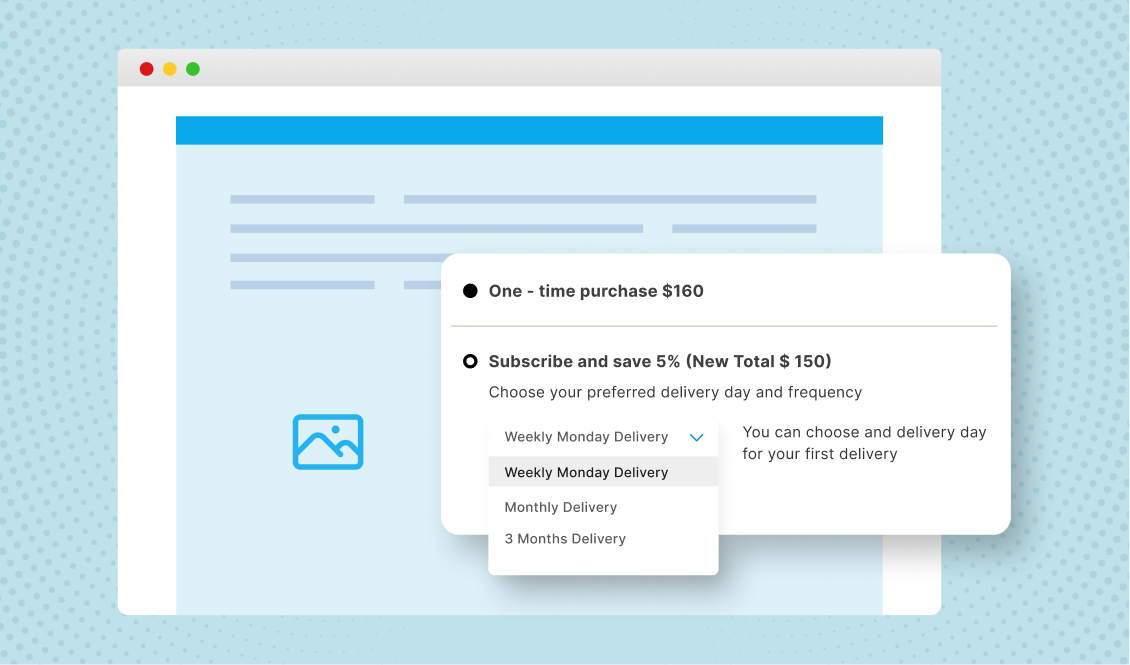
One of the most common occurrences in subscription models is customers wanting to pause, skip, or cancel subscriptions because they aren’t able to finish all the products from the last delivery, and it’s already time for the next delivery.
And yet, most subscription businesses do not bother to address this issue. An effective solution is creating usage-based subscriptions on your Shopify store.
Instead of offering fixed interval deliveries, align them with customers’ actual usage. The result: reduced unused stock for customers and for your business. Less pause, skip, and cancellation.
In this blog, we share strategies to build usage-based subscriptions on Shopify that effectively reduce churn.
A snapshot of ideas in this article
- Fixed delivery cadences (e.g. monthly) don’t suit all customers, leading to surplus stock and subscription cancellations
- Adaptive subscription cadence align delivery frequency with each customer’s actual consumption patterns — reducing churn
- Offer at least 3 frequency options and automate behavioral triggers (e.g. prompt a frequency change after 2 consecutive skips)
- Use data like skip patterns, reorder timing, and “days since last order” to identify at-risk subscribers and adjust frequencies
- Not all products are suitable. The best fits have variable but predictable consumption (e.g. coffee, supplements, cosmetics)
- Solve both over-delivery (too soon) and under-delivery (runs out early) by personalizing schedules per subscriber
- Continuously measure success via churn rate, skip rate, save rate, and subscriber LTV, and optimize every 3 months
7 strategies to build usage-based subscriptions on Shopify
Here are 7 strategies to set up consumption-based subscription model in your Shopify store:
1. Why fixed cadence causes churn
Most subscription programs have the standard 1-month delivery periods. And it’s because it is easy and convenient for the brand. But the reality is, all customers might not need a subscription box delivered every 30 days.
Customers’ consumption habits differ. For instance, a family of 6 might finish their coffee supply faster than a family of 4. As a result, the smaller family is left with surplus coffee at the end of the month. So shouldn’t their delivery dates differ?
The solution is not just adding a skip or pause button, because then, you’re going to lose on revenue. Your strategy should involve creating an adaptive subscription cadence that aligns with customers’ consumption habits.
According to a McKinsey report, more than 50% of consumers place importance on being able to schedule deliveries. Creating a subscription structure that aligns delivery frequencies with subscribers’ consumption patterns is key.
Here are some quick takeaways:
- Track your product’s consumption cycle for different customer segments
- Offer delivery schedules based on the needs of different segments
- While you may start with the standard one-month delivery format, be flexible and make changes as you go
- Track the subscription retention rate for six months and optimize accordingly
2. Usage-based subscriptions definition
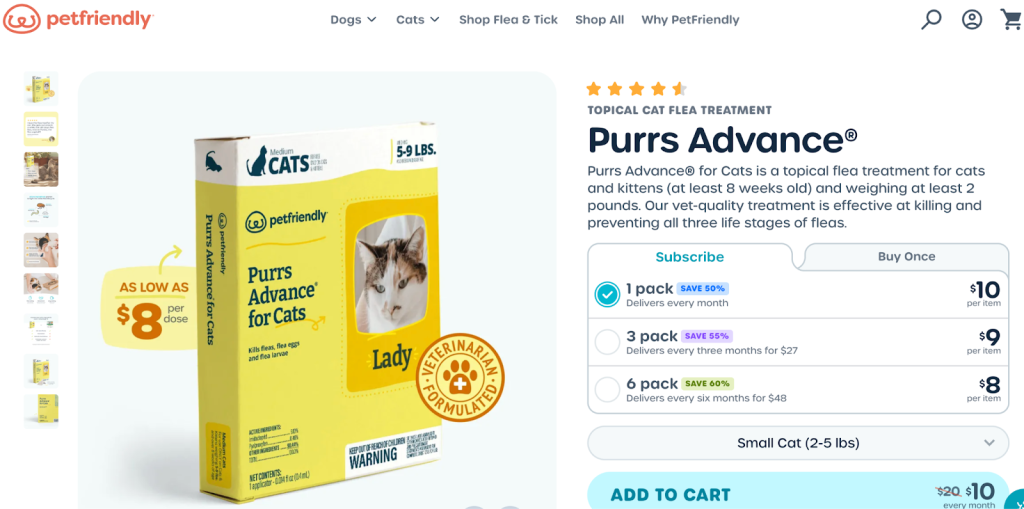
If you thought usage-based subscriptions on Shopify were simply about setting up a skip or pause button, you are mistaken. These are subscriptions that are strategically designed to match delivery schedules with customers’ consumption patterns.
For instance, subscribers can inform you about their usage, or you could track and collect data based on subscribers’ order, skip, and pause patterns, or you could automate the process with the help of machine learning and predictive analytics.
Here are some tips:
- Provide at least three delivery frequency options. For example, every week, every fortnight, and every month
- Automate behavioral triggers. For example, if there are two consecutive skips, automatically send a prompt offering a frequency change
- Appstle Subscriptions App can automate behavioral triggers, communication to subscribers, follow ups, cancellation management, etc.
- Start with self-reported flexibility; layer in predictive adjustments once you have 6+ months of behavioral data.
3. Identifying products suitable for usage-based models
Consumption-based subscription models work best for products that have variable consumption. At the same time, the product consumption should be predictable, too. Moreover, your target audiences’ household size and residents can also help determine the products. Products that are results-driven, for instance, cosmetics or vitamin supplements, also decide the type of products to include in your subscriptions.
Here are some tips to follow:
- During checkout, ask customers how often they use the product. Then use auto-set to set that as their frequency
- Ask the size of their household to understand their consumption needs
- Identify 30-, 45-, and 60-day cancellation cohorts. If most cancellations fall in one of these periods, it means the frequency is wrong
- Create frequency tiers based on products, such as a coffee subscription for 200 gram, 400 gram. Etc.
4. Using data to adjust frequency
One of the best strategies to plan your delivery frequency is within your existing subscriptions. We’re talking about data. You can extract data from your subscriptions to help plan frequencies. Big companies such as Amazon apply data analytics across all its properties to improve customer experience, which account for 35% of the company’s revenue.
For your Shopify subscriptions, the time between two deliveries can give you information about consumption rate. If a customer on a 30-day delivery schedule starts reordering on the 25th day, it’s a sign you can decrease the frequency.
Here are some tips to follow:
- Track subscribers who have skipped two or more deliveries in the last 3 months. These are high risk subscribers. Intervene to change the frequency to retain them
- Automate settings that can identify when subscribers skip two or three consecutive deliveries. This can help you reduce Shopify subscription churn
- Track “days since last order” versus “scheduled interval” to understand if your frequencies are too fast or too slow
- Segment subscribers based on the number of orders placed. For instance, orders 1 to 3 require onboarding support, orders 4 to 8 require habit reinforcement
5. Enabling adaptive subscription cadence in Shopify
For Shopify subscription brands, it’s easy to set up usage-based subscription models with the platform’s ecosystem. For instance, apps like Appstle Subscriptions enable frequency management, customer portal customization, skip, pause, and swap functionality, and more.
Here are some functionalities for frequency management:
- The app allows customers to make changes in their delivery frequency on their own. They do not require contacting customer support for it
- Customers can change the delivery frequency, skip, pause, or swap products
- The cancellation is easy and no-hassle, making customers feel assured that they are not stuck with a long-term commitment
- Appstle Subscriptions App can send automated messages for renewal reminders, delivery notifications, etc.
Here’s what you can do:
- Audit your current Shopify subscription portal to check all the functionalities that make it easy for subscribers to change frequencies
- Set up automated notification messages and pre-renewal alerts
- Add the frequency adjustment option in your cancellation flow to increase retention potential
6. Reduce over-delivery and under-delivery
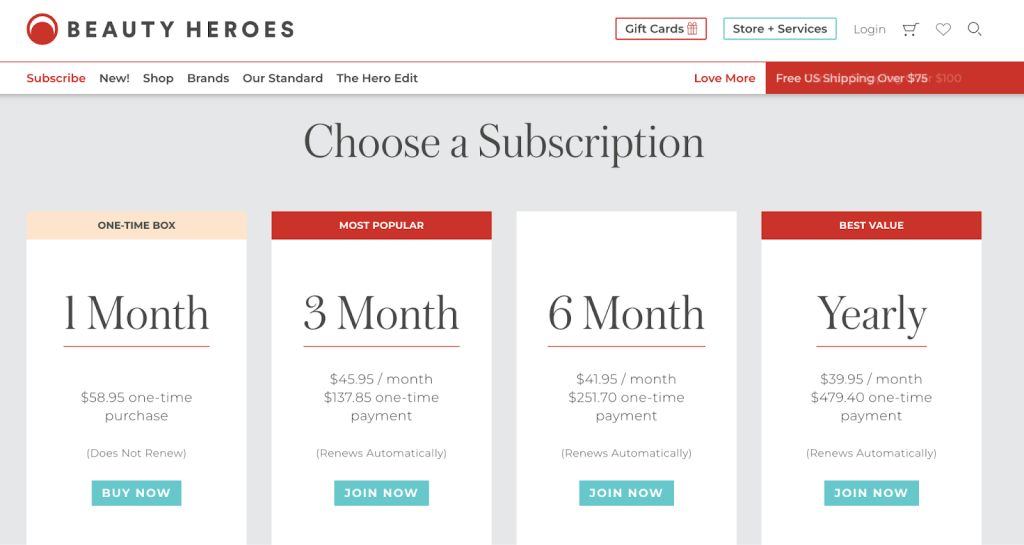
Usage-based subscriptions in Shopify solve two problems. Problem one: over delivery, which means deliveries arrive too soon even before the products from the last delivery are consumed. And problem two: under delivery, which means products run out before the next scheduled delivery.
The idea is to narrow the gap between these two. The solution is usage-based subscription frequencies. This strategy also makes customers’ experience personalized. 71% of customers expect personalization.
Here’s what you can do:
- Track what subscribers do once they skip deliveries. Do they resume on schedule or cancel? This can help you decide how to intervene
- Add an option that allows subscribers to place early reorders if they used products faster than anticipated
- Based on the product type, add a “how much do you have left” prompt in your automated pre-renewal messages. The answer can help you decide frequency changes
7. Measuring the success of usage-based Shopify subscriptions
Running a usage-based subscription model is an ongoing process, not a one-time activity. You have to continuously monitor and make adjustments.
For example, measure the churn rate before usage-based and after. Another indicator of success is when subscribers reduce skipping deliveries. Also measure save rate – the number of subscribers that chose to stay when they were offered frequency change.
Here are some tips:
- Define a monthly baseline for churn so you can measure it effectively
- Track skip rate as a key churn indicator and set an alert threshold
- Calculate subscriber LTV based on frequency tiers
- Run surveys when subscribers cancel to understand the reasons
- Conduct 3-month reviews to optimize continuously based on performance
How to set up usage-based subscriptions on Shopify?
Subscription models provide predictable revenue, higher LTV, lower acquisition dependency, among other benefits, but only if customers find value in your subscriptions.
The answer is setting up usage-based subscriptions.
So, how can you get started?
Integrate a smart Shopify subscriptions app, such as Appstle Subscriptions. Set up the desired subscription type, automate repetitive tasks, collect and run data analytics, and get started with the subscription.
If you’re looking to incorporate usage-based subscriptions in your Shopify store, install Appstle.