
Ecommerce merchants are creating innovative subscription offers for their customers. From meal kits to cosmetic bundled subscriptions to holiday travel packages, every industry is offering appealing subscriptions.
The subscription industry is thriving with many first-time subscription box brands entering the industry.
However, this growth and excitement also leads to subscription box mistakes, often impacting the business before it even stabilizes.
In this blog, we look at subscription box mistakes that most subscription founders make and subscription box business tips to avoid making those mistakes.
A snapshot of the key ideas in this article
- Wrong products kill subscriptions. Prioritize high-repeatability items with healthy margins and a discovery element.
- Don’t overload your first box. Stick to 5–7 SKUs, keep fulfillment simple, and set quality expectations you can consistently meet.
- Retention is everything. Offer pause/skip options, engage subscribers between shipments, and don’t rely solely on discounts.
- Weak operations will sink you. Build rolling inventory forecasts, simulate shipping costs early, and choose a tech stack that can scale.
Shopify subscription box mistakes to avoid
We’ve discussed some of the most common subscription mistakes made by first-time subscription businesses. Along with the mistakes, you’ll also find subscription box business tips to avoid those mistakes. Use this as your subscription box startup guide to set up a strong foundation.
Mistake 1: Choosing the wrong products
The products in the subscription boxes are the most important element of this business model. But many merchants get it wrong. This affects first order conversion rates. Here are some common subscription box mistakes related to products to avoid:
- Low repeatability items: Subscription models work well for products that customers need to replenish every now and then. For instance, vitamin supplements, cosmetics, groceries, etc. If you create subscriptions with low-repeatability products, such as a kitchen tool, paintings, etc., customers might not need another box for a long time.
Do this: Answer this question: Will a customer who bought a product a year back still have a reason to receive it today? If you do not have a definite yes as the answer, the repeatability is weak.
- Poor margin structure: First-time subscription box founders don’t realize how costs can increase and profit margins decrease. For instance, the cost of marketing, packaging, free products, etc. can eat into your margins. Hence, it is essential to price your subscription boxes strategically.
Do this: Work backward. Finalize your gross margin first. If your curated box doesn’t fit in the pricing, adjust the price or the curation.
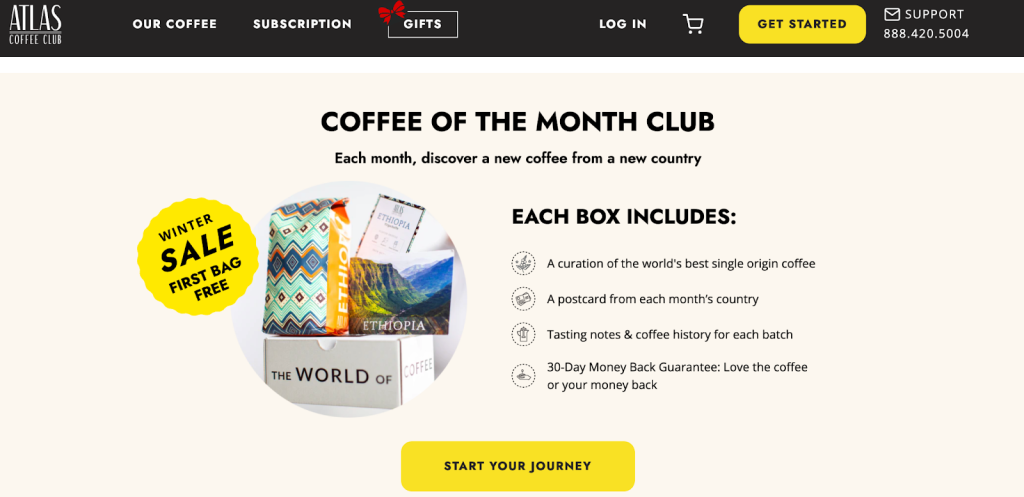
- No product discovery: The element of discovery helps customers find, access, and evaluate products they would not be able to on their own. Subscription boxes need to have a balance of replenishment and discoverability. For instance, a coffee subscription box is a recurring order category that has a high potential for discoverability of new roasts, flavors, etc.
Do this: Articulate your curation by including products that either fit replenishment or discovery needs of customers. If they don’t, replace the products.
Mistake 2: Overcomplicating the first box
Many founders make the mistake of making the first box a showcase, adding too many products, high costs, and not offering free trials. But this can lead to problems. Here’s what some founders get wrong:
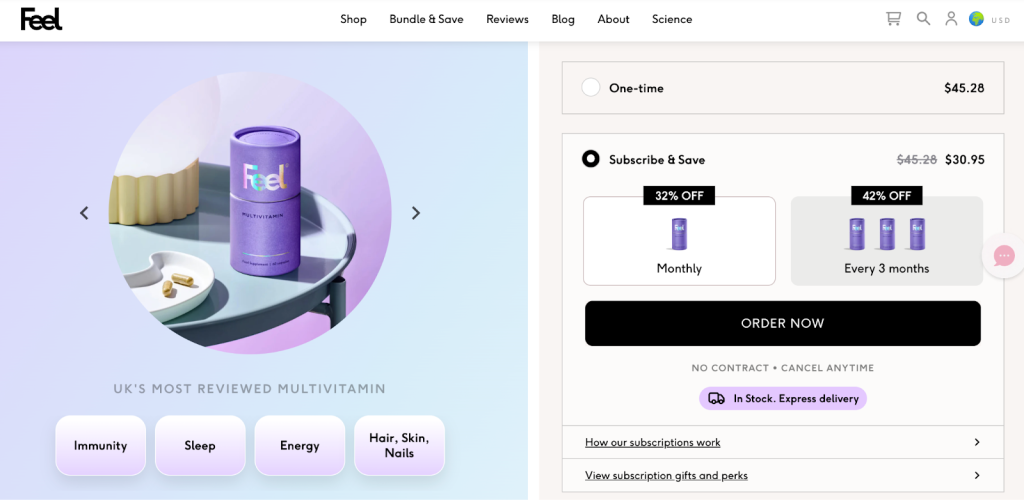
- Too many SKUs: Many brands tend to be generous with the first box and add too many products with different SKUs. This can set high expectations for subscribers. For the brand, this creates operational complexity. The ideal thing to do is to start with fewer products.
Do this: Limit your first subscription box to 5 to 7 SKUs. Ensure each of the products is valuable and can survive as a standalone product too.
- High fulfillment complexity: Some brands tend to make the mistake of including products with different needs into the first subscription box. For example, a product that requires temperature control, another that has a size incompatible to the box, and another with extra packaging requirements. This causes operational complexity.
Do this: Conduct a physical dry run of your subscription box before finalizing. Make note of every detail, difficult, requirement, etc.
- Inconsistent quality perception: Subscribers might set quality expectations based on the first box. However, quality is not only related to the products in the box, but rather, the overall experience and value. Hence, ensure your first-box experience is the same that you plan to provide in the subsequent boxes.
Do this: Create a checklist for quality. Every subscription box should pass the checklist. If you find a problem with the quality of any product, replace it.
Mistake 3: Ignoring retention
The success of subscription boxes is based on retention. But ignoring retention is a common subscription box mistake made by brands. Here are some mistakes to avoid to improve subscription retention.
- No pause or skip options: A common subscription mistake is not giving flexibility to subscribers. For instance, not having an option to pause or skip deliveries. When customers feel trapped, they tend to cancel instead of renewing. It is a must to choose a subscription app that supports pause and skip functionalities.
Do this: Having a pause and skip feature in your subscription tool is non-negotiable. You should be able to customize the feature if need be via built-in features or integrations.
- No engagement between shipments: The period between two subscription deliveries can be used to create engagement. However, many first-time subscription box founders get too busy with other tasks, ignoring this opportunity to create engagement. For example, create online and offline community events, online gamification tactics, quizzes, etc.
Do this: Create a monthly calendar, identify touchpoints, and create content to share with subscribers in between deliveries, to keep them engaged.
- Over-reliance on discounts: For most first-time founders, offering discounts is the first strategy they apply. While discounts help bring subscribers in the short-term, it is hard to retain them with only low prices in the long run. Moreover, customers who join only for discounted prices tend to buy products only on discounts.
Do this: Work on strategies such as exclusive products, early access to new collections, personalization, loyalty and rewards, etc. so that you do not have to depend on discounts too much.
Mistake 4: Weak operational foundations
No matter how well designed your subscription boxes are, if your operational foundation is weak, not scalable or complex, it can lead to various problems and failure. Here are some operational subscription box mistakes made by first-time founders.
- Inventory forecasting issues: In subscriptions, inventory forecasting is easier because you know how many deliveries are to be made and the number of specific products you’d require. However, many subscribers pause, skip, or cancel. If you do not account for these subscribers, you might end up with extra or lesser inventory. That’s why it is important to have a rolling inventory that takes into consideration these changes.
Do this: Create a rolling inventory model that accounts for forecasted subscriber count, projected churn rate, and other factors that might impact the inventory. Review and update this model monthly.
- Shipping cost surprises: First-time subscription box brands often make the mistake of ignoring shipping costs. Shipping costs vary based on location, size and volume of deliveries. The best thing to do is to engage multiple shipping partners and work with the best one based on costing and other factors.
Do this: Conduct a shipping cost simulation before finalizing your box dimensions or pricing, weight the costs by region and dimensional weight to figure out the actual cost rather than a flat shipping cost.
- No scalable tech stack: When choosing your Shopify subscriptions app, ensure it has features that help you scale as your business grows. Most first-time subscription founders launch with the most basic tech stack that is not capable of supporting when business grows. For instance, often the system cannot handle checkout during high-traffic periods.
Do this: Evaluate your subscription app for self-service features, warehouse and inventory integrations, failed payment recovery automation, analytics and reporting, among other features.
How to build a subscription box business without making mistakes
We’ve shared some of the most common mistakes in this subscription box startup guide. From product selection to pricing strategies to operational elements, there’s a lot that you have to work on and avoid mistakes at the same time.
The good news is that with the right subscription box tools, you can easily set up an efficient structure and manage the recurring business model for long-term success.
Appstle Subscriptions App is designed for Shopify stores. The app is built with comprehensive features that help set up and manage subscription business models. Apply the subscription box business tips shared in this article with the support of Appstle app features.
Here are Appstle Subscription App key features:
- Different types of subscription models
- Easy third-party integrations
- Built-in marketing and promotions capabilities
- Upselling, cross-selling, bundling options
- Retention and churn management features
- Engagement features
Install Appstle Subscriptions App in your Shopify store today!