Almost every eCommerce brand has a loyalty program. And customers are part of more than 10 loyalty programs on average. However, customers end up engaging with just a few.
The reason? Most loyalty programs fail to stay relevant to customers. They offer run-off-the-mill perks. Customers lose interest because the programs lack value.
One strategy to ensure relevance and long-term customer loyalty is customization.
In this blog, we explore effective customer loyalty program customization strategies that you could apply to your Shopify store for maximum ROI and growth.
Read on!
Data-driven customer loyalty program customizations
If you’re not using data from your Shopify store, you’re losing out on many opportunities to engage your customers. Consider this: 63% of US-based customers are willing to share their personal details in exchange for rewards. Data can help you gain a better understanding of customers, and give them what they need. This increases conversions. Let’s look at some ways to use data for customer loyalty customization.
1. Tailored rewards and offers
Your most loyal customers expect you to know them, understand their needs and preferences. To create personalized loyalty program experiences on Shopify, offer customers tailored rewards.
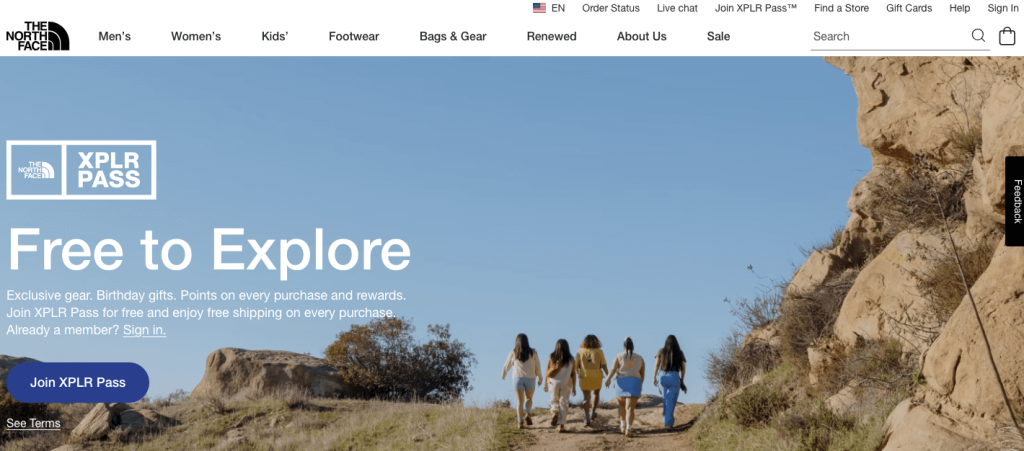
For example, the outdoor apparel brand North Face has a loyalty program, XPLR Pass. Its loyalty members can use reward points towards experiences, such as unique trips. This helps build a stronger connection between the brand and its customers.
2. Personalized communication
Loyalty programs also provide many communication opportunities. For instance, send regular updates regarding points, expiring points, new offers, etc. By gathering data from individual customer accounts, you can send out personalized communication via email, SMS, WhatsApp, etc.
For example, send automated emails to individual customers mentioning their accumulated reward points and how close they are to the next tier. This customer engagement tactic will encourage them to earn more points and progress to the next tier.
3. Milestone recognition
Another way to utilize customer data is to track customer milestones and acknowledge them. For example, when a customer reaches a reward point or spending threshold, celebrate the milestone by offering personalized offers. This can help brands deepend the emotional connection with customers. Use the eCommerce loyalty strategy for your VIP and special customers to increase the potential of them sticking with you for a longer term.
Tiered loyalty structure with behavioral insights
Creating a tiered structure is another strategy that can enhance your customer loyalty program customizations. There’s a lot you can do when you have different loyalty tiers. You can offer multiple options to cater to customer segments, create dynamic adjustments based on customer behavior, and more. Let’s look at some ways to offer customized experience via tiered loyalty structures.
1. Multiple tiers with increasing benefits
When you have multiple tiers, you have access to data for multiple segments. Now what if you provide the same benefits to each tier? It’s not going to add any value to customers in the higher tiers.
But what if your tires have increasing benefits? For instance, say you have three tiers – silver, gold, and platinum. Customers in gold get more benefits than silver, and customers in platinum get the most benefits.
A multi-tiered set up helps with these loyalty program features:
- Customize benefits based on tiers
- Offer increasing benefits to higher tiers
- Distinguish between loyalty members based on tiers
- Create campaigns to entice customers to progress to higher tiers
2. Dynamic tier adjustments
Another strategy for customer loyalty program customizations based on your customers’ behavior patterns is to make dynamic adjustments. Meaning, make changes based on data insights.
For example, if you see that customers are taking too long to jump from one tier to the other, it’s possible that you’ve made it too hard for them. The solution? Make changes, make it easier for customers to move from lower tiers to higher tiers, with speed.
Some customer behavior that you could measure are spending habits, transaction frequency, spending thresholds year-after-year, engagement levels, etc. Use this data to make dynamic adjustments. This will keep your loyalty program engaging.
3. Tier-specific perks
One of the easiest ways to customize your loyalty program is to create multiple tiers and offer specific and exclusive perks and benefits to each tier. The lowest tier gets the least number of perks, while the top-most tier gets the most number of perks.
Many brands with tiered loyalty programs follow this strategy. Some of the exclusive benefits they give to different tiers are more points, bigger discounts, first access to new collections and sales, exclusive events, etc.
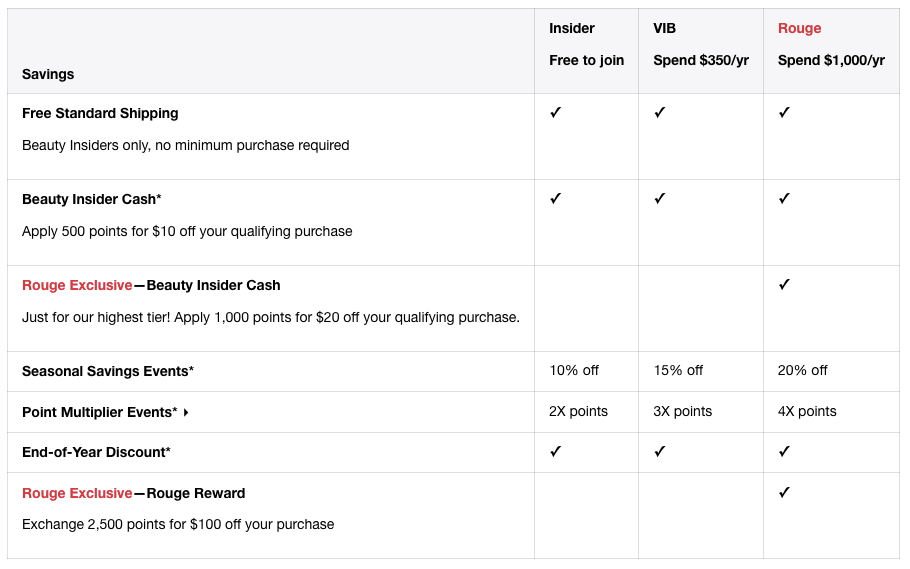
For example, cosmetics brand Sephora offers loyalty benefits in the form of savings, samples, and experiences. All three tiers get different types of these three benefits.
Flexible and customer-choice rewards
8 out of 10 customers that are part of loyalty programs prioritize flexibility in earning and redeeming loyalty rewards. From flexible shipping to tailored rewards to redemption, there are many ways to ensure flexible and tailored rewards experience. Let’s explore some.
1. Reward variety
One of the best eCommerce loyalty strategies is to let customers choose their rewards. When you do so, you make them feel like they’re in control. For instance, you can allow customers to choose from discounts, free samples, experiences, event invites, etc. Doing so makes the loyalty benefits more relevant to customers, enhancing customer loyalty for Shopify stores.
2. Multiple earning channels
Another customer loyalty program customization strategy is something simple but often ignored – setting up multiple ways to earn points. Different customers have their individual preferences. For example, some might make more purchases, and others might be more active on social media talking about your brand. Use these customer preferences to your advantage by creating multiple ways to earn reward points. For example, for purchases, for referrals, social media follow, likes, shares, comments, sharing reviews, etc.
Omnichannel integration
To ensure a more streamlined and unified customer experience, you can set up an omnichannel system where various channels are in sync with each other. Here’s how omnichannel integration can help with customer loyalty program customizations.
1. Seamless experience across channels
When your loyalty program members interact with you through different channels, they should have a seamless and cohesive experience. For instance, if a customer has interacted with you on the app, your customer support agents should be able to access that interaction history.
Research by the Harvard Business Review shows, when “loyal members encounter service failures-shipping issues, problems with returns, stockouts and the like-they get more upset than customers who are not members”.
Integrating loyalty program functionality across channels can make it easy for customers to earn and redeem points across channels. Moreover, if they have any issues, omnichannel set-up can lead to a quicker and more seamless solution.
2. Unified customer profiles
Let’s take an example. Your loyalty member earns reward points via your online store. Their next purchase is in-store and they earn more points. These points should somehow be added and appear in your customers loyalty profile. Synchronizing data across channels can ensure consistency and a unified experience for customers.
Exclusive access and community building
Seth Godin emphasizes, “Build a tribe, not a buyer base”. Building communities for your loyalty program can enhance personal and emotional connections, and create deeper meanings beyond transactions. To leverage community as a tactic for customer loyalty program customizations, explore these strategies:
1. Members-only events and content
An effective strategy for enhancing customer loyalty on Shopify stores is to facilitate a community experience for customers. For instance, private sales for VIP loyalty members, exclusive product launch parties, and other such special events can make customers feel exclusive and special. Also, share exclusive content to increase online engagement and participation.
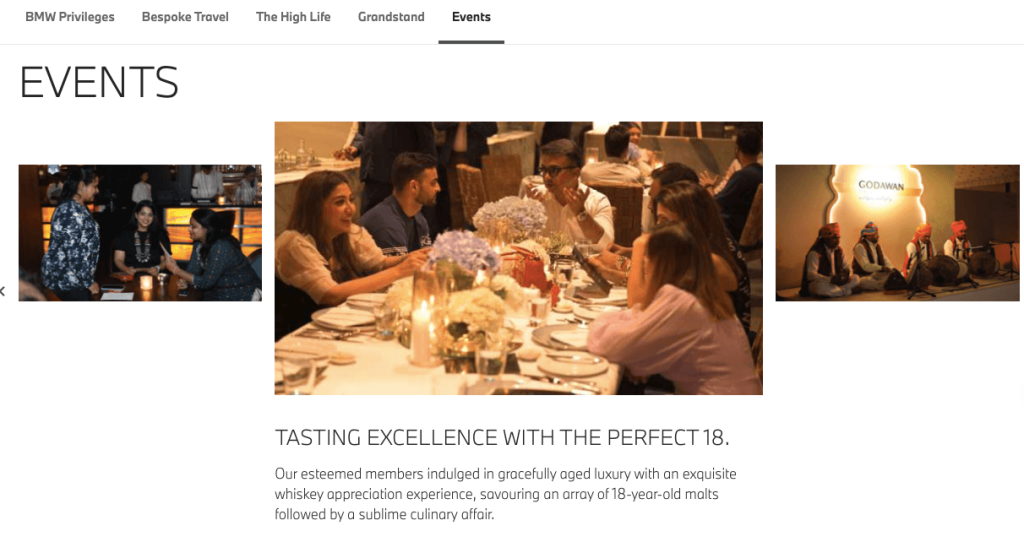
For example, the automobile brand BMW organizes numerous exclusive events for its loyalty program Experience Club – curated art exhibitions, racing events, music concerts, culinary and tasting sessions.
2. Community engagement
The idea behind community-focused loyalty program features is to build emotional connections, where a group of people feel connected, heard, and can share with each other. Creating platforms for community engagement lead to higher personalized experiences.
There are many different ways brands can facilitate loyalty member communities — online, in-person, via WhatsApp groups, social media platforms and other channels. These communities allow members to share tips, ask questions to each other, raise concerns, share reviews and experiences, etc.
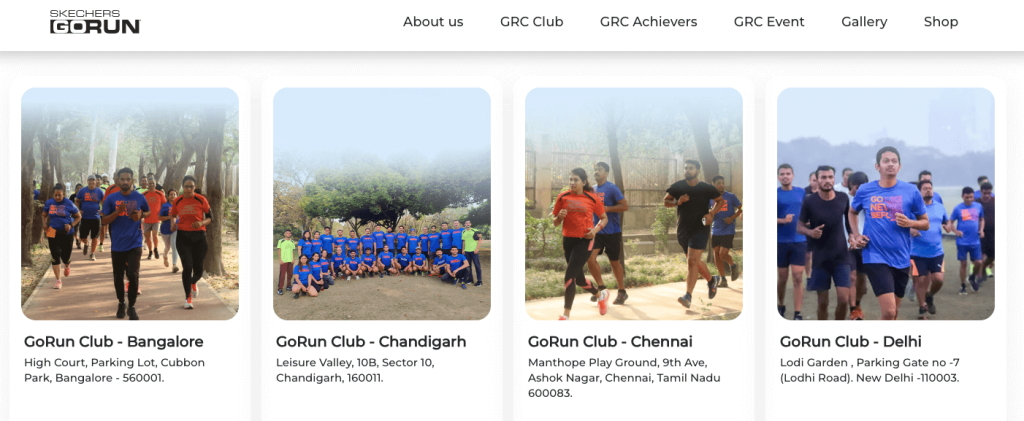
For example, the sports brand Skechers facilitates the GoRun club, a city-based community for loyal members interested in running.
3. Gamification
An exciting strategy for customer loyalty program customizations is to incorporate gamification. It adds personalized experiences, such as instant gratification, provides opportunities for participating and winning challenges, etc.
For instance, some gamification elements you can incorporate in your Shopify loyalty program strategy are badges, challenges, and achievement tracking. These not only make participation fun, but also encourage customers to purchase and engage more.
For example, Nike’s training app offers personalized workouts to members, gamifying their progress – a loyalty program feature that has helped the brand grow its community of loyal members.
Clear transparent communication
Nothing puts off customers more than the feeling of being cheated or lied to. This is what makes clear and transparent communication more important than you might imagine it to be. Let’s look at some ways in which you can ensure clear communication with your loyalty members.
1. Progress updates
Sending regular updates to loyalty members keeps them engaged and tuned into your program. For example, you can send them updates about their accumulated points, rewards earned with each action, and how many points they need to progress to the next tier or unlock surprise gifts.
You can send updates via different channels based on customer preference. For example, email, SMS, WhatsApp, Messenger, etc. Also, let customers know about expiring points so they are not in for a surprise if their points lapse.
2. Multi-channel messaging
When you use communication channels that are preferred by customers, it positively impacts your loyalty program. For instance, brands have seen higher engagement, conversions, and stronger customer retention.
Incorporating multi-channel communication is easier when your Shopify loyalty program app allows easy integrations. For example, set up messaging via email, SMS, WhatsApp, Messenger, push notification, among other channels. Also, optimize messaging times based on customers’ preference.
Robust technical infrastructure for customer loyalty program customizations
In this day and age, your loyalty program is only as good as your technical infrastructure. The market is full of customer loyalty program apps and platforms, but you must find one that’s most useful and relevant for your Shopify store. Then, apply these strategies:
1. Reliable and scalable platform
When planning your Shopify customer loyalty program, ensure you take a long-term approach. If your business and loyalty program has to scale, you should be prepared. One of the basic elements that will help you scale is your loyalty program app or platform.
For example, your app should be able to manage real-time updates as the numbers scale, fraud prevention, and smooth integration with POS and CRM systems are a must. From payments to invoicing to messaging and rewarding, ensure you have a strong infrastructure to manage all this.
2. Automation and AI
Automation and AI are a must to offer personalized loyalty program experiences on Shopify. For instance, real-time messaging via customers’ preferred channels is the most basic form of technical capability that customers expect from brands.
You can use AI and automation in many ways to offer personalized marketing messages and offers, dynamic offers to reduce churn, among others.
Ready to kick start your customer loyalty program customization strategies?
There are a lot of strategies that can help you effectively run your Shopify loyalty program. However, you must choose those that are relevant to your brand and your customers.
And to ensure a strong foundation, use a smart app, such as Appstle Loyalty & Rewards.
Appstle enables you to set up customized loyalty programs with points, store credits, referrals, rewards, and VIP perks. The app has features that help automate building brand loyalty and customer retention.
With Appstle Loyalty & Rewards App, you can easily gamify and manage your Shopify loyalty programs.
Install Appstle Loyalty & Rewards App on your Shopify store today!