
Many subscription programs look successful when a brand is doing $5M–$20M in revenue.
But once a business reaches enterprise scale, the challenges change dramatically.
Managing thousands—or millions—of subscribers across channels, markets, products, and fulfillment systems introduces operational complexity that most subscription strategies were never designed to handle.
This article explores the biggest subscription challenges enterprise brands face and how leading ecommerce companies build programs that continue scaling beyond $100M in annual revenue.
Key concepts in this article
- Enterprise subscriptions aren’t just bigger SMB programs. They’re operational systems that touch finance, fulfillment, support, marketing, and logistics simultaneously.
- Running multiple subscription models (subscribe & save, memberships, bundles, prepaid, VIP) in siloed systems creates compounding complexity across every team.
- Forecasting subscription revenue at scale requires more than MRR. You need cohort-level models that account for pauses, skips, failed payments, and seasonal behavior.
- Subscriber flexibility (skip, pause, swap) and operational efficiency are in direct tension. The solution is structured flexibility with well-designed guardrails, not unlimited freedom.
- At enterprise scale, 1–2% monthly churn equals millions in lost revenue. Churn isn’t just voluntary cancellations. Involuntary (payment failures) and subscriber fatigue are equally costly and often overlooked.
- Global programs multiply complexity: local currencies, payment methods, tax compliance, regulations, and localized communications all need first-class infrastructure, not afterthoughts.
- Omnichannel subscribers expect a unified experience across your website, app, retail, and marketplace, which requires unified customer identity, not fragmented channel data.
- Subscriptions, loyalty, and memberships work best when integrated. Tenure-based benefits, renewal-linked points, and exclusive subscriber experiences compound retention over time.
- The right subscription platform should handle all of this through configuration, not custom development otherwise technical debt becomes your biggest growth obstacle.
What makes enterprise eCommerce subscriptions different?
Many think the only difference between the subscription programs of small and medium-sized businesses (SMBs) and enterprise businesses is the scale. And that enterprise subscriptions require more server capacity. But that’s not it.
An SMB subscription is more a checkout feature where customers select the delivery frequency and the subscription runs on autopilot from thereon.
But for enterprises, subscriptions involve operational systems that touch almost every department of the business. For instance, multiple product lines, products with different margins, multiple fulfilment centers, international customers, different currencies, and tax rules.
The subscription system that easily handled 10,000 subscribers can’t handle 500,000 with the same system. It will require changes to its architecture, tools, and processes.
The brands that understand this and treat subscriptions as infrastructure are the ones that face fewer challenges compared to the brands that treat subscriptions as just a feature.
Common challenges of enterprise eCommerce subscriptions
1. Managing multiple subscription models across product lines
Most enterprise businesses have multiple programs running simultaneously, to cater to different types of customer segments. Some of the common models of subscriptions are:
- Subscribe & save
- Bundles
- Memberships
- Build-a-box subscriptions
- Prepaid subscriptions
- VIP Programs
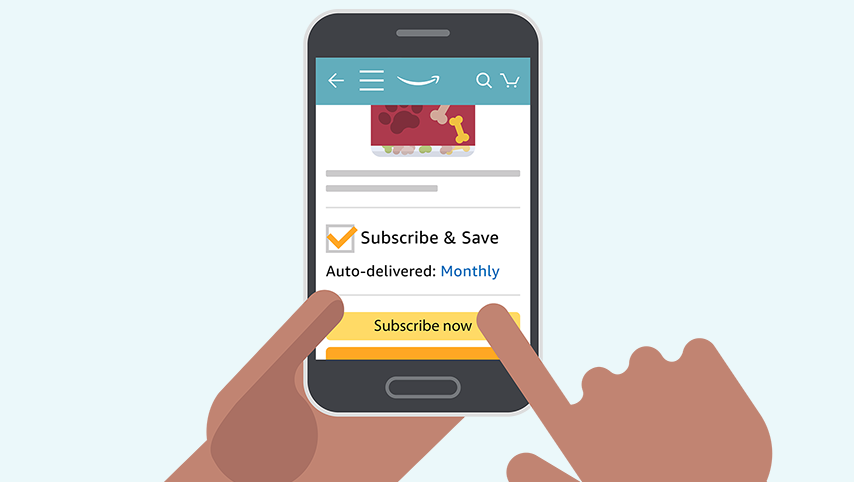
One of the most known enterprise eCommerce subscriptions examples is Amazon. It has subscribe & save for replenishment, Prime for access and membership, and Prime Video. These cater to different customer segments.
The challenge is running so many models simultaneously. When these models are managed in separate systems or through improper systems in a single platform, operational complexity can easily compound.
For example, the finance team may find it difficult to forecast revenue, support teams may not have unified customer views, and your marketing teams may find it hard to run lifecycle campaigns.
The solution? Build an enterprise eCommerce subscription on a platform that has the ability to manage multiple subscription structures within one framework. For example, it should have the capacity for shared identity, shared analytics, and shared billing infrastructure. And yet, be able to provide different experiences to subscribers in each model.
2. Subscription forecasting gets harder at scale
Subscription models are designed for predictable revenue. However, for enterprise businesses, forecasting subscription revenue at scale is more complex that one might think it is.
Some of the most basic things that need forecasting in subscriptions are inventory requirements, manufacturing schedules, logistics capacity, and revenue. You can know this by knowing the number of subscribers who will receive orders in a given period. But for enterprise brands, the number of subscribers is large, and that’s where complexity begins.
Subscribers may pause, skip, payments fail leading to churn, and purchasing behavior changes based on seasons. During promotions, there may be a spike in orders. All these customer behaviors can lead to complexities. For instance, subscriber count and average order value will always be wrong in enterprise eCommerce subscriptions.
What’s the solution? Enterprise brands need a robust eCommerce subscription platform with analytics that go beyond surface-level MRR and model actual order fulfillment behavior. Here are some features it should have:
- Building cohort-level models that account for pause and skip rates by subscriber age
- Integrate payment failure and recovery data into net revenue forecasts
- Create rolling 90-day forecasts that update dynamically as subscriber behavior changes
Subscription brands with this kind of forecasting infrastructure tend to get better financial planning and reduce the inventory waste and stockout risk that harm subscription program margins at scale.
3. Balancing subscriber flexibility with operational efficiency
One of the most common reasons that customers stay away from signing up for subscriptions is the fear of getting stuck. Meaning, what if they sign up and realize they do not want to continue or want to change the delivery frequency, or want to stop deliveries for a few months.
Today’s customers want control on everything. For example, they want to easily cancel, or skip deliveries, or pause for a short while, swap products, and more. When subscription programs don’t offer this flexibility, customers tend to stay away or cancel if they’re already subscribed. This has a negative impact on enterprise subscription management.
However, offering this level of flexibility creates operational complexity. For instance, subscription teams want predictability, but offering flexibility leads to unpredictability for different teams. The brands that figure out how to offer flexibility and maintain operational efficiency are the ones that can succeed at the enterprise level.
Here’s how to do it: Build structured flexibility. Meaning, create a custom framework where subscribers have flexibility within parameters that allow operations to run effectively. For example, offer skip features but allow these changes at least 3 days before the next billing date.
Allow product swaps only for pre-approved items rather than any SKU selection. The idea is to provide subscribers control, but at the same time planning it well to ensure enterprise eCommerce subscription efficiency.
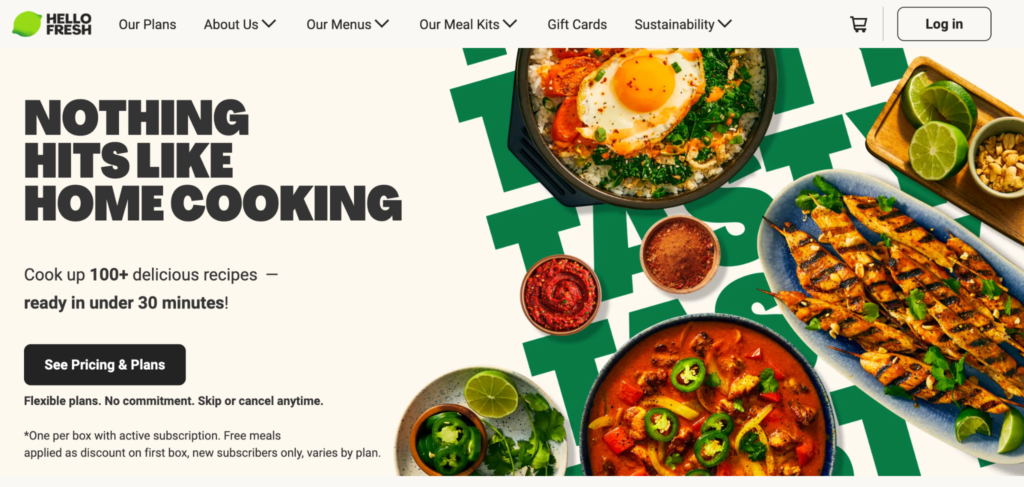
An example: HelloFresh has a cut-off time for subscribers to make changes. There’s flexibility but it is designed around a tightly managed operational framework.
4. Subscription churn is not just a retention problem in enterprise brands
For small brands, subscription churn is a retention issue. But for enterprise brands, churn means financial risk and a huge loss of revenue. You can understand this when you do the math.
Moreover, for enterprise brands, churn may be more complex. For example, churn comes in various forms:
- Voluntary churn: Subscribers cancel themselves maybe due to lower perceived value, switching to competitor brands, or life changes. Reducing voluntary subscription churn needs proactive lifecycle management.
- Involuntary churn: At times, subscribers get unsubscribed due to payment failures. Enterprise brands can recover involuntary churn by automating dunning with the help of a subscriptions app.
- Subscriber fatigue: Some subscribers don’t cancel but they don’t even engage. They skip, don’t open emails, and are likely to cancel soon. Identifying these subscribers before they cancel is key. You can do so by automating discounts and offers.
- Competitive switching: Subscribers may switch to better subscription plans offered by competitors. Brands can build switching barriers through strategies, such as exclusivity, loyalty, and experiences.
Solution: Enterprise brands can manage churn by building retention flows, integrating payment recovery automation, creating proactive at-risk identification systems, and measuring churn through segmentation.
5. Managing global subscription programs
Most enterprise brands operate in multiple international markets. Even simple eCommerce functions for global markets, such as currencies, payments, taxes, etc., are challenging. Adding a subscription layer makes enterprise subscription management more complex.
- Billing and payment complexity: Subscribers in different countries may pay in different currencies, via different platforms, and with different rules and conversion rates. Each of the payment methods may need a different recovery system. Managing dunning sequences for multiple systems may require a complex infrastructure setup.
- Tax compliance: Every country may have a different tax rule. Applying the correct tax logic and staying up to date with changing tax rules can be challenging for enterprise eCommerce subscriptions.
- Regulatory requirements: Every country has specific regulations for language, notifications, privacy, etc. Subscription programs that do not comply with the regulations of each country, can get into legal trouble.
- Localized subscriber communications: Subscribers in different countries have to be sent communication in its local language. From renewal reminders to payment notifications, to cancellation confirmations, from language to currency to pricing, everything has to be localized.
- Customer support across time zones: Enterprise eCommerce subscriptions require automated customer support systems that can cater to customers in different time zones and ensure a consistent experience.
The solution is to integrate an eCommerce subscription platform that makes managing global subscription programs easy and efficient.
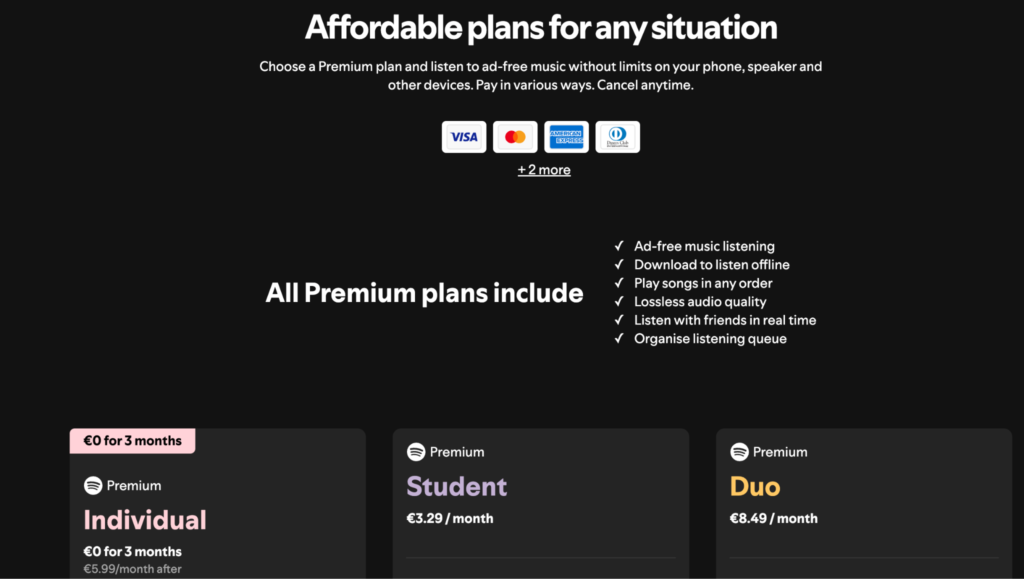
Here’s an example of how Spotify localizes pricing across countries and adapts payment methods market by market.
6. Integrating subscriptions into omnichannel commerce
Enterprise brands often sell from various platforms, apart from their own website; for example, retail partners, marketplaces, mobile apps, and also third-party subscription boxes. The program not only has to work across all these platforms, it also has to ensure a unified customer identity.
For instance, customers may sign up via the website, place orders via the app, and use other platforms to communicate. Enterprise brands have to create integrated systems that allow unified customer identities. But with subscriptions involved, there may be some challenges.
- Complex subscription attribution: It is difficult to trace metrics. For instance, which platform gets credit when there’s a sign up, how to calculate the LTV of customers who mix retail and subscription purchases, etc.
- Retail and subscription integration problems: While integrating retail and subscription programs is a challenge, many enterprise brands have found solutions. For example, subscription-aware point-of-sale integrations.
What’s the solution? Many brands are building subscription relationships at the customer level, not the channel level. Brands are allowing subscribers to manage their plans from multiple platforms and receive a consistent experience.
7. Connecting subscriptions, loyalty, and memberships
The most successful enterprise brands integrate subscriptions, loyalty, and memberships, instead of treating them as separate entities. That’s because each of these marketing strategies has limitations, which can be overcome by integrating the three.
- Combine subscription renewals with loyalty programs by offering points for every renewal. The points can be redeemed for upgrades, products, or experiences.
- Offer benefits and membership tiers based on how long customers have been subscribers. As the benefits of staying subscribed compound over time, it may lead to higher retention.
- Offer exclusive subscriber experiences to create switching barriers.
How to overcome integration challenges? Ensure a unified customer data layer for subscription, loyalty, and membership. An action in one should trigger a response in the other.
For example, Sephora’s Beauty Insider.

What enterprise eCommerce subscription brands should look for in the platform
Here are some questions to ask to ensure you get your enterprise subscription management right.
- Can it support multiple subscription models in a unified system?
- Can it manage complex bundle and configuration logic?
- Does it have genuine membership and loyalty integration capabilities?
- Are the APIs enterprise-grade?
- Does it support global expansion?
- Can it support omnichannel experiences?
- Can it reduce operational complexity rather than add to it?
- Can it scale without requiring custom development for every new capability?
Get started with an effective enterprise eCommerce subscription program
The challenge isn’t launching a subscription program. It is to set up subscription systems that continue working efficiently and continue getting better.
Most of the challenges shared here, whether technical or operational or strategic require a robust infrastructure – a subscriptions app, such as Appstle Subscriptions.
If you’re looking to succeed in your enterprise eCommerce subscription program, explore Appstle.