
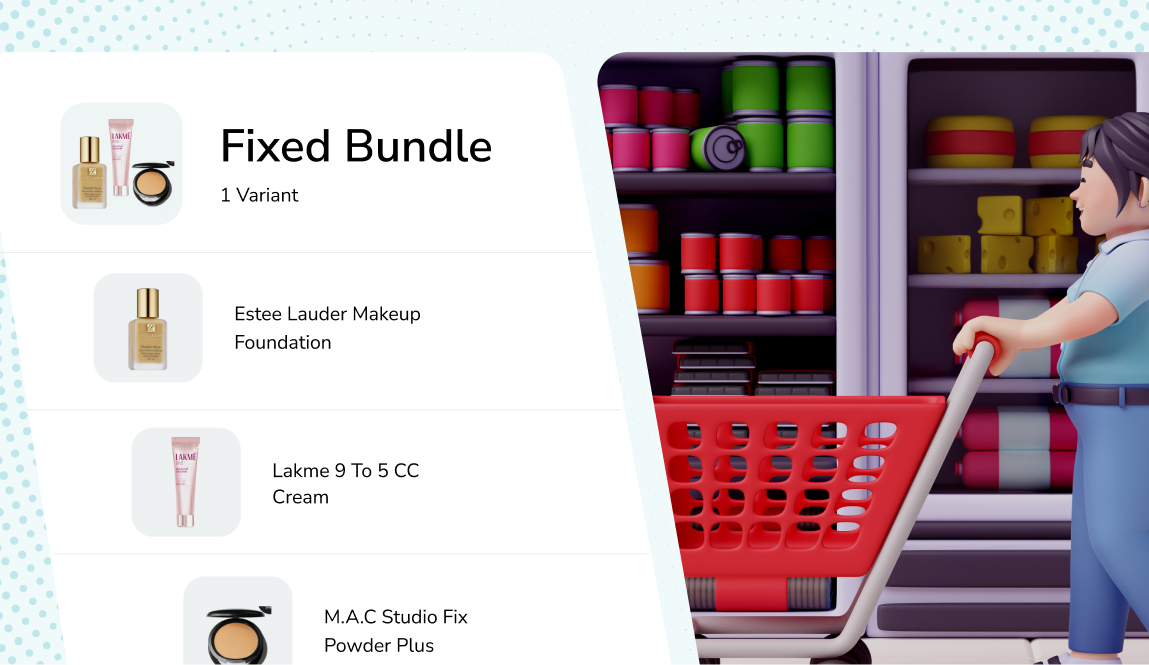
Many brands invest heavily in product bundles on their ecommerce store but overlook how those same bundles appear in physical retail environments.
The result? Customers see different offers, pricing structures, and product combinations depending on where they shop.
As ecommerce and retail continue to merge, creating a consistent omnichannel product bundles experience across channels is becoming a competitive advantage.
This guide explores how brands can build an omnichannel bundling strategy that increases revenue, improves customer experience, and simplifies operations.
Let’s get started!
A sneak peek into the key strategies in this article
- Omnichannel product bundle consistency means customers get the same pricing, offers, and product combinations whether they shop online or in-store, which builds trust and avoids confusion.
- Common challenges include mismatched online/offline offers, inventory gaps between channels, undertrained in-store staff, fragmented tech systems, and disconnected performance reporting.
- Key strategies for consistency: build a unified bundle strategy with clear goals and audience, standardize pricing and value across channels, use combined online/offline sales data to pick winning bundle combinations, and align merchandising teams on promotions and launches.
- Make bundles easy to discover everywhere (PDP recommendations, checkout upsells, in-store signage and POS prompts), ensure inventory/fulfillment can reliably support bundle orders, and measure performance (attach rate, conversion, AOV, revenue) across channels rather than in silos.
- Well-executed bundles also boost broader omnichannel KPIs like AOV, conversion rate, inventory turnover, and product discovery.
- A dedicated bundling app (like Appstle Bundles & Upsells) can help unify bundle management across online and offline channels.
Why does bundle consistency matter in omnichannel commerce?
Today, commerce is complex. There are multiple channels that customers engage on. For instance, eCommerce stores, physical stores, pop-up shops, events, wholesale partners, and Shopify POS, among others.
Customers tend to engage on multiple channels at the same time. For example, discover bundles via social media, buy them via the website, and follow up via another channel. If every channel works in a silo, it will lead to inconsistency.
Inconsistency causes many problems. For instance, differing information on channels leaves customers confused. Inconsistency in pricing can lead to reduced trust and lower conversion rates.
Customers expect the same brand experience across the platform. Simple things such as uniform pricing and consistent bundle information can have a positive impact without trying hard.
The most common omnichannel product bundle challenges
With multiple channels come complexity and challenges. Here are some of the most common challenges around omnichannel product bundles.
1. Different bundle offers online and offline
What if you see a ‘Buy 3 Get 1’ offer online, want to touch and feel the product before buying, so you head to the physical store only to find the offer is not available in-store? You’d be let down, and might even feel like brands are tricking customers into buying things online without trying.
2. Inventory constraints
Inconsistent inventory between online and physical stores can also lead to confusion and customer dissatisfaction. For instance, you see a particular product in the physical store and decide, for convenience, to place an order via the app. But discover later that the product is not available online.
3. Staff awareness gaps
While brands find it easy to promote bundles online, quite often, in-store sales staff are not trained to push bundles or find it hard to sell them. Moreover, online and in-store bundle offers might have inconsistent messaging, leaving customers confused.
4. Technology limitations
Another key challenge for omnichannel product bundles is because of the systems used to manage bundles. Systems and tools for online and in-store bundles might be separate, which might lead to inconsistent bundle offers on the channels.
5. Reporting fragmentation
For a bundle strategy to be effective, you need to track and monitor its performance across channels – online and in-store. Moreover, you need a unified performance view. But this may be hard in an omnichannel set up.
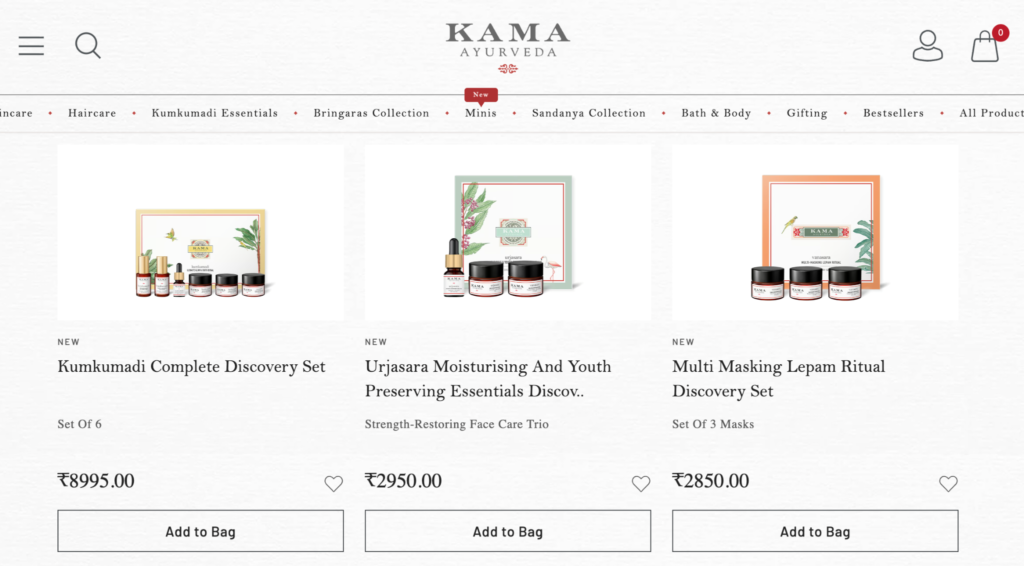
7 ways to create consistent omnichannel product bundle experience
Here are 7 strategies to create consistency in omnichannel product bundle experience for customers.
1. Start with a unified bundle strategy
Creating a well-thought strategy is key to the success of your bundles. That’s because when your foundation is clearly designed keeping in mind your goals, the chances of failure lessen. Here are some factors that you should have clarity on:
- Bundle goals: What do you want to achieve with your bundling strategy? Do you want to move slow stock, increase average order value (AOV), or introduce customers to new products? Your goals will define your strategy.
- Target audience: Who is your target audience? Who are you building the bundles for? An audience-product mismatch can be a key reason for slow bundle sales. Define your target audience before you plan your bundles.
- Product combinations: Choose the bundle products strategically. For instance, combine low-selling with most-popular, or products that complement each other. Avoid putting random products together as this may backfire.
To ensure consistency, answer these key questions:
- Why does this bundle exist?
- What customer pain point does it solve?
- Who is this bundle for?
2. Standardize bundle value across channels
One of the biggest drawbacks of omnichannel product bundles is inconsistency in the value customers get from bundles from online and physical stores. For instance, if you offer the same bundle with two different prices or offers, online and in the physical store, customers will definitely get confused.
Here’s how you can ensure consistency:
- Same offer: Make the same discount, benefits offer, online and in-store. When you do this, customers don’t feel cheated or dissatisfied. Even if you’re offering multiple ways to collect orders through BOPIS (buy online and pick in-store) or BOPC (buy online and pick up curbside), keep the approach consistent.
- Same value proposition: Every customer shopping from your brand must feel valued in the same manner, regardless of the platform they’re shopping on. Ensure same bundle discount, same-value free gifts even though formats change.
- Similar pricing structure: Offer online bundles incentives in-store and vice versa. This kind of similar pricing builds trust and drives customers from one platform to the other. Even though you may display or package bundles differently, the core pricing structure should be similar.
3. Use data to identify best-selling bundle combinations
As Seth Godin said, “Don’t find customers for your products, find products for your customers”, putting together different products for each bundle is a strategic activity, not a random thought. To ensure you have the best bundle combinations, follow these strategies.
- Frequently-purchased-together products: One of the best ways to create a successful bundling strategy is to look at data from past sales. Which products are frequently bought together? For this, combine online and in-store data to design bundles. Integrating a good Shopify bundling app makes this easier, not only to refer to data but to ensure your data reflects changing patterns and trends over time.
- Cross-category purchases: Which cross-category products are customers buying together? For example, a glass cleaner solution, a kitchen platform mop, and a long-handle broom being bought together for home upkeep. Look for patterns to get ideas for creating bundles of products from different categories.
- High-margin combinations: A sure way to ensure high average order value is to have high-margin products in omnichannel product bundles. This ensures your online and physical store can meet its revenue goals and a lower gap between the two stores.
For all these strategies, use data from online and in-store separately, as well as analyze the combined data to discover patterns.
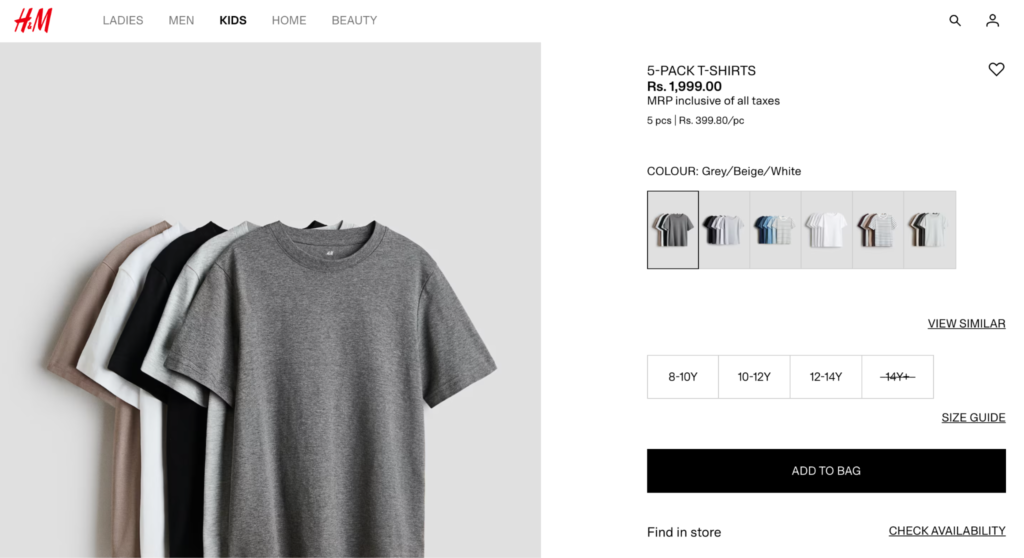
4. Align online and in-store merchandising teams
Imagine the product and sales team creating bundles to be launched but the marketing team for the physical store does not have any information about it. Bundle success requires collaboration between various teams. When every team is aligned and in sync with the plan, you can drive higher success rates for omnichannel product bundles.
Here are some factors to consider for omnichannel merchandising:
- Shared promotions calendar: Running omnichannel bundle promotions can be a challenge if teams work in silos. Planning bundle promotions requires various teams—product, sales, marketing, order fulfilment, and logistics—to be in sync for planning online and offline promotional activities and offers.
- Consistent messaging: An aspect for omnichannel businesses that builds trust and removes confusion is consistency in messaging across customer touchpoints. Whether it’s in-store or online, your offers, tone, voice, and core value proposition of the bundles should remain the same.
- Product launch coordination: One of the most challenging aspects of omnichannel product bundles is to sync the launch. For instance, say you’re selling football kit bundles. You launch online. Customers visit your physical store to shop after trying on the kit. However, your in-store launch is delayed. This can seriously harm your brand reputation.
5. Make bundle discovery easy in every channel
One mistake that many brands make is they make bundles seem like an afterthought or a strategy to clear stock. When you mix bundles with single products, when you don’t highlight them and give them the attention they deserve, your customers will also perceive them as something that’s not as exciting.
One way to change this perception is to display bundles with equal importance as other products. And this goes for both online and physical stores. Let’s look at some factors to remember when displaying bundles.
- Online: Include bundles in the product detail page (PDP) recommendations, personalize recommendations for customers, upsell bundles through the checkout page, and add them in landing pages. Also, create a separate page featuring only bundles.
- Retail: In the physical stores, let bundles be at the forefront. Display signage and posters to promote bundles, and train the staff to recommend bundles. Another way to increase bundle sales is point of sale prompts (POS) at the billing counter.
The idea is to make it easy for customers to discover bundles wherever they’re shopping.
6. Ensure inventory and fulfilment can support bundles
Consistency also means being able to fulfil orders. For instance, a returning customer may want to buy the same bundle again but if you aren’t able to fulfil the order soon, it may reflect on your brand’s order fulfilment competency. Some of the challenges, such as bundle stockouts, component shortages, and inventory allocation for omnichannel product bundles, can be overcome.
Here are some best practices to follow:
- Monitor bundle inventory separately: Mixing up single products and bundle products in the inventory can get confusing. It can lead to repetitions, and incorrect calculations. By monitoring bundle inventory separately, you can ensure bundle products never run out and are restocked based on need.
- Forecast demand: Any successful order fulfilment process is based on forecast and planning ahead of time. Place restock orders before your bundle products run out. To do so, forecast demand based on past sales patterns.
- Track bundle performance by location: Monitor bundle sales by location for online and physical stores. This can help you predict and forecast product requirements for restocking inventory in time.
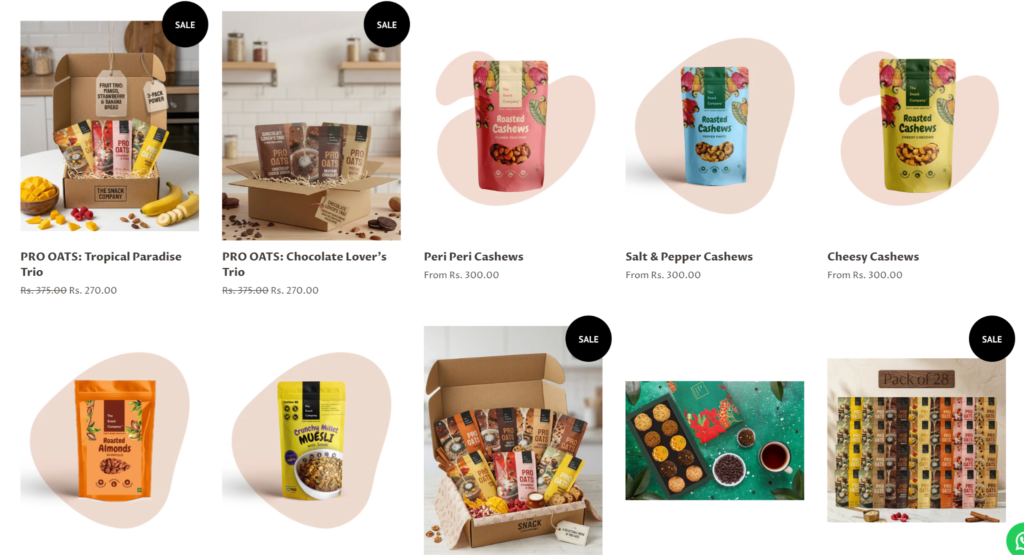
7. Measure bundle performance across channels
Measuring bundle performance metrics, such as sales rate, return rate, average order value, etc., can give you an overview of what’s working, what’s not, and optimization opportunities.
But measuring online and offline bundle performance separately can create blind spots. Analyzing data from online and offline bundles in a unified manner can give a better picture of what’s required to reach omnichannel product bundle goals.
Here are some bundle metrics to track online and offline:
- Bundle attach rate
- Bundle conversion rate
- Bundle revenue
- AOV impact
- Cross-channel performance
How product bundles improve omnichannel KPIs
Let’s understand how product bundles help improve some of the most important omnichannel KPIs.
1. Average Order Value (AOV): Instead of single products, you are selling more than one product per transaction, increasing AOV. Moreover, including a high-value product in a bundle can further increase AOV.
2. Conversion rate: When you strategically design bundles based on past sales patterns, seasons, trends, and customer preferences, you make purchase decisions easier.
3. Inventory movement: Omnichannel product bundles make it easy to get the inventory moving – slow-moving products, new items, perishable products, etc. can be moved in time when there are more than one sales channels.
4. Product discovery: Introducing new products to customers becomes easier with bundles. You can mix a new product with old bestsellers, create a bundle with new products and offer a discount or add small size sample products.
Summing up
The most successful eCommerce brands don’t look at bundles only as an online strategy. They combine offline channels as well. However, for an efficient omnichannel product bundle strategy, you need a smart bundling app for your Shopify store.
Appstle Bundles & Upsells offers a wide range of features to integrate the most efficient capabilities in your Shopify store.
Install Appstle Bundles & Upsells App in your Shopify store today!