
Enterprise eCommerce brands that implement headless commerce experience several benefits from it, such as improved site performance, greater agility and scalability.
Headless commerce provides more freedom and control to large and ambitious brands as its front end and back end are separate from each other. Many competitive businesses choose to implement headless commerce infrastructure for its benefits.
In this blog, we explore what is headless commerce subscription, its advantages for Shopify businesses, and why ambitious businesses must consider headless commerce for subscription models.
Let’s get started!
Understanding headless commerce for Shopify
Before we explore the many ways in which headless commerce enhances or helps subscription businesses, let’s get clarity on what headless commerce is and how it functions.
Headless commerce separates the front end and back end of your Shopify website. For instance, the front end, which includes all the visual aspects that your customers can see and interact with, are disconnected with the back end.
The back end of your Shopify store includes all the systems, the structure, and logic that enables your website to function. In headless commerce, these two aspects are separate and disconnected, and function independently. Thus, giving more flexibility and freedom to merchants.
Among the many brands that have implemented headless commerce for various business goals are Amazon, Walmart, Nike, Toyota, Tesla, and McDonalds. These large enterprise brands have utilized the benefits of headless commerce for different purposes, such as for scaling their business, for providing omnichannel experiences, for customization, and more.
Now let’s understand the advantages of headless commerce for subscriptions and how it can help with eCommerce subscription innovations.
Advantages of headless commerce subscription systems for Shopify stores
Apart from the obvious benefits, such as more agility and freedom, eCommerce subscription brands can utilize headless commerce for many more advantages. Let’s explore the many advantages of headless commerce and ways in which you can maximize the capabilities of headless commerce.
1. Highly customizable subscription models
With the frontend and backend being disconnected, headless commerce provides flexibility and customization possibilities for subscriptions. Traditional platforms, where the front-end and backend are tightly knit, do not offer such flexibility. Here are some examples:
- You can control the content and content structure you show to subscribers
- Create personalized customer experiences via content based on the segment you are targeting
- Set up variable billing cycles and customized shipping schedules
- Offer customized subscription options based on customer preference
- Create unique subscription flows for individual customers or segments
- Design user interfaces from scratch, adapting to changing customer needs without disrupting the entire system
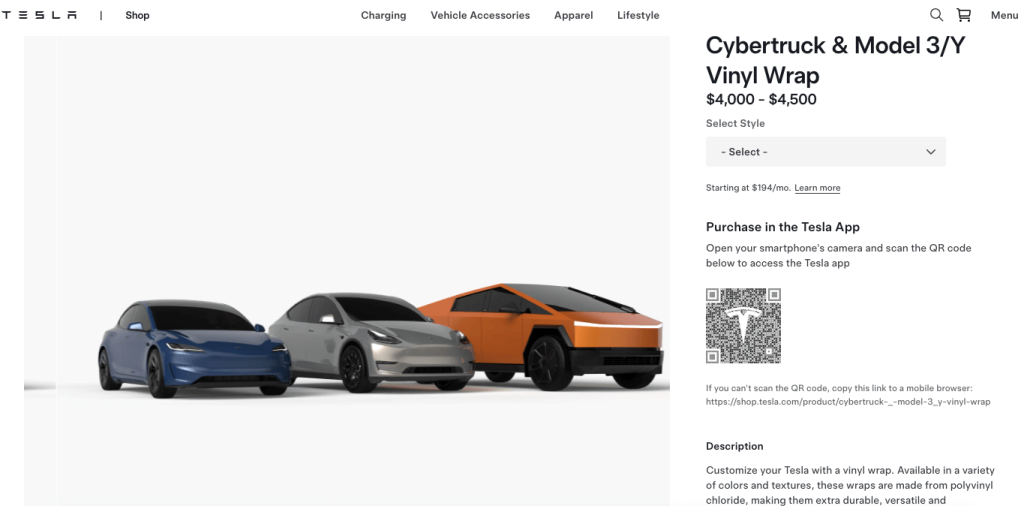
By implementing headless commerce for your Shopify store, you can improve subscription UX in multiple ways. For instance, Tesla is known to use headless commerce to allow customers to choose materials and colors to customize their cars.
2. Agility to adapt and innovate
The subscription market is rapidly evolving, leading to new trends and rising customer expectations. With headless commerce, subscription brands can easily update features based on market trends.
For your Shopify store, this means keeping customers happy and engaged, and meeting their needs and preferences. Here’s what you can do with headless commerce subscription:
- Introduce new products rapidly
- Change product pricing
- Change billing and invoicing features
- Experiment with new features without disturbing the current process flow
- Launch new subscription deals with minimal technical overheads
- Add subscription functionalities
- Create more personalized experiences based on seasonal customer demands
- Run A/B testing with ease to optimize subscription features
Here’s an example: Staples, the office supply retailer wanted to do away with the siloed catalog experience. It implemented headless commerce, which enabled customers to place orders by number and order history for faster reordering.
3. Seamless omnichannel subscription management
With headless commerce subscription, you can offer consistent experience across the subscription touchpoints. For instance, subscribers browsing or interacting with you via your mobile app or website or WhatsApp, get the same consistent information.
For brands, this can help in improving subscription UX, increased customer satisfaction, more sales, and overall better performance on the subscription website and app. Here’s how it helps your subscription model:
- All customer and subscription data is accessible via APIs, ensuring a consistent experience on different channels, such as website, app, in-store, etc.
- Real-time synchronization keeps subscription status, billing information, and inventory levels updated across channels
- Customers can start a subscription on one device and seamlessly continue management on another without any disruption
- Send personalized offers and recommendations based on customers’ subscription history
- Access to subscriber history and data from all channels to support teams
- As subscription preferences change, the inventory and fulfillment systems automatically adjust across channels
For example, if you have online and off-line stores and want to offer a seamless omnichannel experience to your subscribers, you could do so with headless commerce. Your customers could navigate your physical store via your mobile app as well as place orders.
4. Customer control and self service
With headless commerce subscription, brands can enable higher levels of self-service for customers. Subscription management tools can give subscribers control over their subscription accounts.
For Shopify brands, this can reduce customer support overheads. Moreover, it can increase customer satisfaction, leading to more sales and new customers via word-of-mouth by existing satisfied customers.
- Subscribers can change delivery schedule, pause deliveries, or change orders
- Subscribers can change payment methods, billing preference, etc., enhancing checkout process
- Change subscription plans, upgrade or downgrade based on preference
- Change language and currency based on location and preference
- Reactivate paused or canceled subscriptions
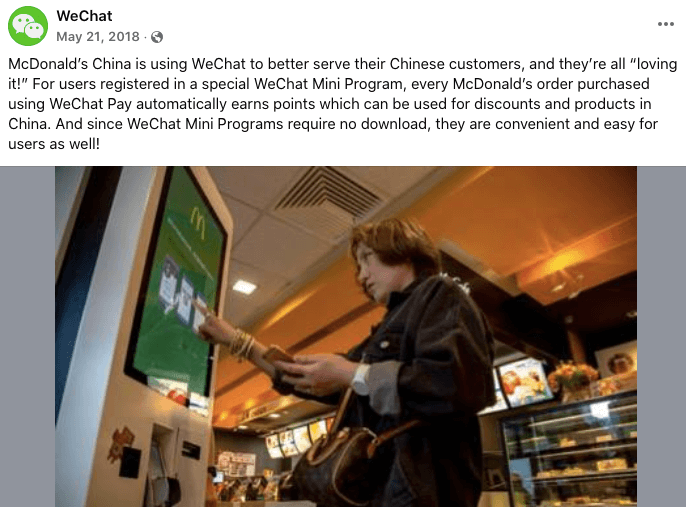
For example, McDonalds used headless commerce to allow its customers to pay using the Chinese instant messaging service WeChat.
5. Scalability and platform agnosticism
Headless subscription commerce makes it easy for businesses to scale. When the different elements of the front end and back end are separate, they can each grow independently. This enables scalability.
For instance, when each element is independent, you can make changes to it separately without disturbing the other elements or the flow. This way, you can select the most effective tools for each of your Shopify subscription store features. Here’s how headless commerce helps with eCommerce subscription innovations:
- Scale features separately, for instance, features like billing, analytics, etc.
- Integrate various platforms and tools to manage subscriptions
- Easily upgrade one element or component without having to rebuild the whole subscription system
- Introduce new products or pricing models
- Easily manage increased transactions by making changes to only the back end
- Expand to new markets by implementing location-specific features
- Run A/B tests on specific components only
Here’s an example: Walmart uses headless commerce to enable customers to shop faster. It built a unique app-like website, increasing company revenue.
6. Enhanced data integration and analytics
Headless commerce also allows you to integrate data across different departments and systems. This leads to better analytics. For example, information from subscription sign ups, billing, marketing, customer support, and inventory, all can be integrated for better analytics.
Moreover, this also helps with predictive modeling and strategic, data-driven decision making. Here are the advantages of headless subscription commerce for data and analytics:
- Synchronize data in real-time across processes, for example, invoicing, shipping, marketing, order management, etc.
- Deep customer behavior analytics that combines subscription, purchase, and engagement history data
- Calculate precise customer lifetime value based on data from various components
- Collate data from your Shopify subscription app and website for more accurate analytics and reports
For example, if your Shopify subscription page is facing slow load times due to heavy data, you could reduce load time with headless subscription commerce. You can create a system that keeps front end and back end data separate as well as synchronized it when required.
7. Reduced operational complexity, faster time to market
The eCommerce subscription market is vibrant where customers expect new and innovative experiences. Headless subscription commerce enables brands to stay agile and adapt quickly to market trends.
For subscription businesses, this means reduced operational complexities, and faster processes. Here’s how headless commerce helps:
- Launch new subscription products, offers, and deals in less time
- Incorporate features requested by customers, making advanced customization possible
- Implement platform upgrades independently without disturbing the entire subscription system
- Allow front end and back end teams to work independently and simultaneously
- Introduce dynamic pricing models and subscription tiers quickly
- Easily test and change subscription features without disrupting the entire system
For example, say there’s a new payment method in the market. You can implement and integrate it without having to disturb the front end and back end process flows.
Ready to implement headless commerce subscription on your Shopify store?
Whether you have an established Shopify subscription business that needs an upgrade or you want to set up a new subscription model for your business, headless commerce subscription is definitely worth exploring.
Not only does it provide freedom and flexibility, it also enables other features, such as omnichannel experiences, customization, personalization, customer self-service options, etc.
If you’re looking to implement headless commerce, you will require a Shopify subscription app that easily enables you to do so.
Meet Appstle Subscriptions App. The app, designed for Shopify and Shopify Plus, offers features for recurring orders, subscription management, 1-click checkout, churn control, gamification, and more.
The app is designed to provide merchants the capabilities to customize, personalize, and create intuitive shopping experiences that complement the advantages of headless commerce.
Explore more features and benefits of Appstle Subscriptions App for your subscriptions business.