One-size fits-all ecommerce loyalty programs are no longer relevant. These types of rewards programs fail to retain customers, and eventually fail.
But when you give customers a choice and flexibility to choose rewards they prefer, you change the entire loyalty game.
In this blog, you’ll learn 8 ways choice-based loyalty rewards can increase customer engagement and retention in your Shopify store.
Let’s get started!
Key concepts in this article
- Give customers control, let them pick their own rewards (discounts, perks, or experiences) to boost emotional investment and reduce disengagement
- Personalize by behavior, use purchase patterns and browsing data to offer rewards that are actually relevant to each individual customer
- Cut irrelevant rewards, audit your program every 4–6 months and remove any rewards with low redemption; generic rewards actively erode trust
- Leverage the endowment effect. Letting customers choose their reward makes them value it more, even if the reward itself is identical
- Build active participation loops, unlock better rewards at higher tiers so customers have a reason to keep coming back and engaging
- Segment your rewards, new customers need quick value, regulars need recognition, and VIPs need exclusivity; don’t treat them the same
- High perceived value ≠ high cost. Early access, behind-the-scenes experiences, and handwritten notes often outperform discounts at a fraction of the cost
- Redemption is your health metric. 30–40% of loyalty points go unused; choice-based rewards dramatically improve redemption rates and retention
8 customer engagement loyalty strategies around choice-based rewards programs
Here are 8 strategies to implement in your Shopify store through which you can allow customers to choose rewards they prefer.
1. Giving customers control over rewards
Even though your rewards seem enticing in the beginning, after a point, they fail to keep customers engaged. The result: disengagement and eventually cancellation. And the solution: autonomy.
When customers feel like they’re in control of their rewards, they feel more motivated to participate. They are more emotionally invested in your brand. In choice-based rewards programs, customers get to choose the rewards. For instance, some rewards that can be offered for customers to choose from:
- Discounts: percentage off, cashback
- Free shipping on the next purchase
- Early access, VIP status, priority support
- Events, workshops, and exclusive moments
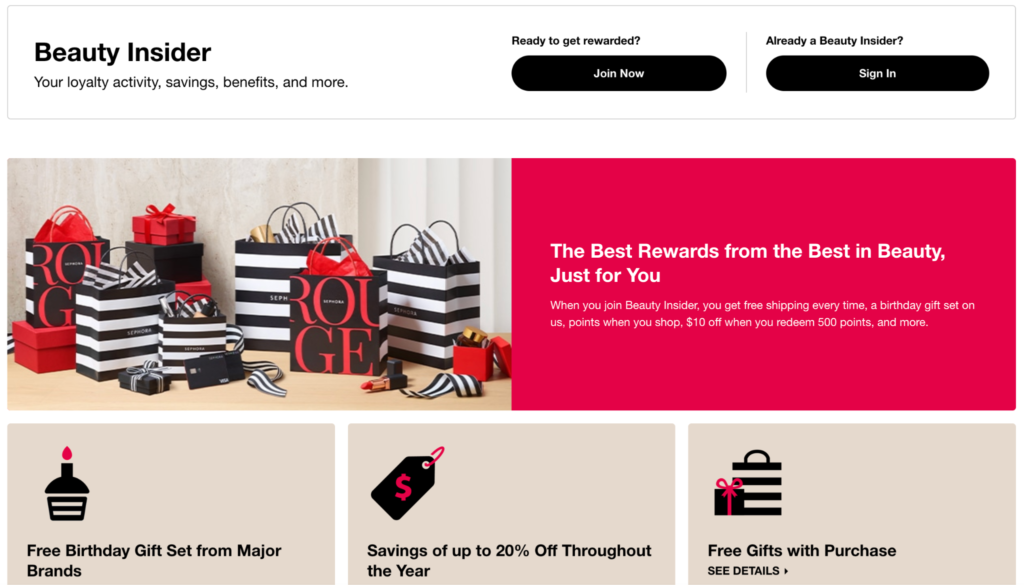
For instance, Sephora’s Beauty Insider program allows members to choose between discounts, limited-edition product sets, or events. As a result, the brand saw over 34 million members who tend to be loyal to the brand.
To integrate this choice-based loyalty rewards strategy into your Shopify store, start with two or three types of rewards that are relevant to your customers. Change or add a few more rewards over time.
2. Personalized reward options
Offering discounts, points, free shipping, or occasional gifts is something that all brands do. But what if this one-size-fits-all approach shifted to personalized rewards? Offer rewards that are designed based on customers’ preferences and what they do.
How do brands offer personalized rewards? By collecting data – purchase patterns, category preferences, browsing history, and seasonal purchase behavior. For instance, if a customer mostly buys books from your online store, they may not be interested in early access to sales on footwear. But allow them to pre-order a new book, and you might have all their attention.
By collecting and analyzing data, you can turn a generic rewards program into something that is tailored to individual customers. Many brands have done this, including Starbucks. Starbucks uses machine learning to personalize rewards. For instance, customers who order oat milk lattes every Monday morning, see different rewards than customers who buy cappuccinos on weekends.
To begin with, you can create two or three purchase behaviors, frequency, category, and spend levels.
3. Reducing irrelevant incentives
Another strategy for choice-based loyalty rewards is to do with removing generic rewards, and including only relevant ones. For instance, a hardware store giving a spa voucher, or a pet brand giving an airline miles reward doesn’t make sense. Customers might just ignore and waste these rewards. Here are some reasons why customers disengage with reward programs:
- Rewards feel irrelevant or generic
- Earning rewards is hard
- Rewards and points expire soon before they can be used
- The redemption process is complicated
Here are a few things you can do to enhance your customer engagement strategy:
- Audit your rewards program every four to six months
- If the redemption of rewards is low, remove those rewards
- Introduce rewards that customers actually want
4. Increase the perceived value of rewards
Ever thought the perceived value of a reward is more important than its actual monetary value? That’s true. For instance, a customer who is given an option to choose their preferred rewards will value it more than being given the same reward without the option to choose it themselves.
In psychology, this is called the ‘endowment effect’, an emotional bias where customers value something more if they have a sense of ownership. By allowing customers to choose the rewards themselves, you can create this feeling of ownership. This results in higher satisfaction, better brand association, and increased repeat purchases.
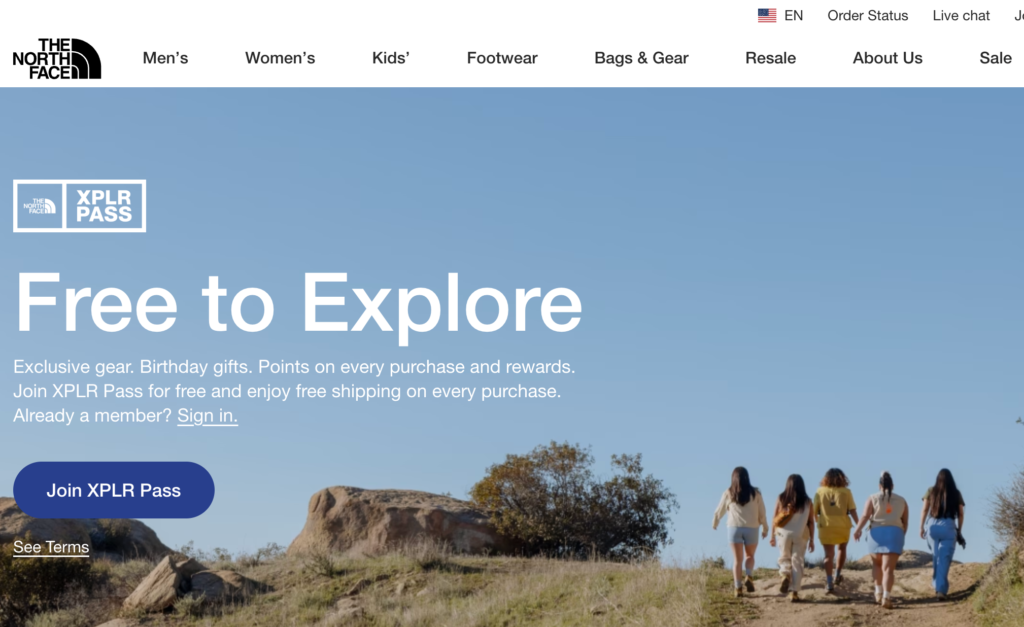
For example, The North Face loyalty program, an outdoor clothing and gear brand, lets its loyalty members choose between discounts, exclusive product launches, or experience-based rewards that include outdoor activities. Their members who choose experiences, report 40% higher satisfaction.
Here are some tips:
- Price your reward options so that non-discount rewards feel premium
- Include experiences and exclusive access to your rewards
- Keep a track of which rewards get chosen more
5. Encourage active participation
Traditional rewards programs where brands give rewards and customers simply collect them without any further engagement are limiting. Such rewards programs lead to passive customers who rarely notice the rewards program.
This is where choice-based rewards programs make the difference. They create engagement and offer something for customers to work toward. For example, when better reward options unlock at higher tiers, or when limited-time choices appear based on activity, customers engage more than their next purchase. They check the app. They click the email. They come back to see what’s new. Such active engagement leads to retention.
Here’s an example of how Nike’s choice-based rewards program keeps customers coming back. The brand has a gamified rewards program that offers perks, such as early product access, personalized training plans, event invitation, etc. Members can track their fitness data via the app, and tend to engage 4X more frequently than non-connected members.
Here are some tips:
- Build a ‘progress toward something’ mechanic into your program
- Rewards should get better as customers participate and engage more
- Create different types of engagement loops
- Track and optimize from time to time
6. Segment-based reward customization
When it comes to rewards, different customer segments have different preferences. For instance, younger Gen Z customers shopping for weekend brunch experiences have completely different reward preferences from a millennial buying home essentials. If you give similar rewards to both these customer segments, it may not work.
To cater to different segments, you have to create rewards that are designed based on who they’re for. While your rewards program infrastructure can be the same, the presentation and rules can be tailored.
Amazon does this well. It segments rewards by usage as well as demographics. For instance, Amazon Prime rewards are based on how members actually use the service. Customers who shop more receive more discount rewards, while those who stream more receive more perks related to content and entertainment. And business account holders see cashback offers. Behavior-based flexible loyalty programs helped Amazon Prime achieve a retention rate of over 93%.
Here are some ways to implement this strategy:
- Start with two or three segments
- New customers segment: show them value fast
- Regular customers segment: make them feel recognized
- VIP segment: offer exclusivity and status
7. Balance cost and impact
Most brands think choice-based loyalty rewards will cost a lot as it involves giving options. The fear that customers might pick the most expensive rewards keeps brands away from this rewards format.
But the truth is customers pick rewards that are higher in value and lower in cost. For instance, having first-access to new collections of limited editions might be more valuable to a customer than a 15% discount.
Some rewards that make customers feel good are early bird notifications, handwritten thank-you notes, and a behind-the-scenes experience that costs less but feels significant. The idea is to build thoughtful rewards, not budget-friendly.
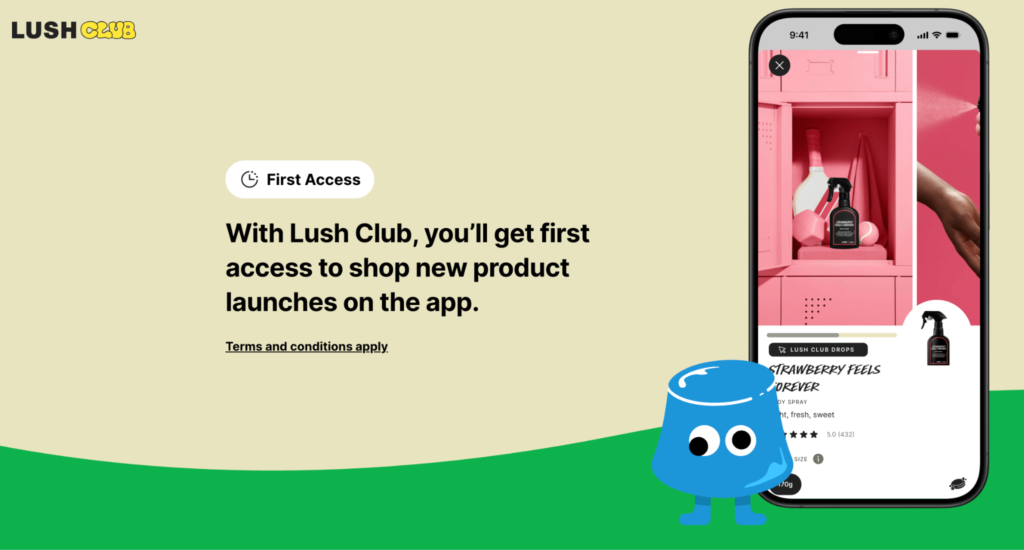
The cosmetics brand, Lush, offers loyalty members a choice between product samples, early access to limited-edition launches, or invitations to in-store sessions where members help create new products. Members who choose the product-creation reward tend to make 68% more repeat purchases.
8. Improving redemption rates
Did you know most loyalty points don’t get redeemed? Approximately 30 to 40% of points expire unused. That’s a clear sign of a program that needs more work because customers aren’t finding value, did not feel the need to reciprocate, and might churn.
You can solve this issue with choice-based loyalty rewards. When customers get to choose a reward that’s relevant to them, they redeem it. When redemption is easy and the rewards are valuable, customers feel satisfied and positive, and engage more.
How to set up a choice-based loyalty rewards program?
Flexible, personalized, and choice-based rewards programs are helping brands increase engagement, retention, and customer satisfaction by making customers feel seen, heard, and understood.
If you already have an existing rewards program, you don’t need to rebuild it from scratch. You can just add mechanics that enable choice-based rewards. And to do that, you’ll need a smart partner such as Appstle Loyalty & Rewards App.
Appstle enables multiple reward types, gamification, performance analytics, intuitive marketing, and other features that help set up customer engagement loyalty strategies.