In subscriptions, sending products too often or too rarely can be a reason customers cancel. Subscription cadence mismatch often leads to churn, and low retention rates.
In this blog, we explore how to get the timing right, and retain your subscribers for the long term.
Key strategies in this article
- Cadence mismatch: Delivering too often or too rarely is a silent but major driver of subscription churn
- Analyze real consumption patterns by tracking skips, delays, and reorder gaps instead of relying on assumptions
- Offer flexible delivery frequencies (weekly, bi-weekly, monthly, quarterly) so every subscriber finds a cadence that fits
- Make skip and pause easy, prominently placed and one-click accessible, to give subscribers breathing room instead of a reason to cancel
- Use behavioral data (skip patterns, delays, engagement signals) to proactively suggest better-fit cadences before churn happens
- Send smart refill reminders timed to each subscriber’s actual consumption pace, not a fixed calendar schedule
- Let customers choose their cadence at signup using lifestyle-framed questions — early self-selection dramatically reduces early churn
- Track cadence performance continuously. Monitor churn by frequency segment, run cohort analyses, and iterate based on cancellation reason data
What is subscription cadence (and why it matters)
Subscription cadence refers to the frequency and timing of deliveries. But it’s not just about shipping intervals. It involves factors, such as when customers receive their orders, how that timing aligns with when they run out of the product, and how well it fits their lifestyle.
Cadence involves three core elements:
1. Delivery frequency: weekly, monthly, quarterly
2. Order timing: when is delivered in the billing cycle
3. Quantity per shipment: does the box last until the next one arrives?
When cadence is well-matched, subscribers feel satisfied with the subscription. But when it’s mismatched, it leads to frustration. Let’s understand some subscription frequency optimization strategies.
7 strategies to fix subscription cadence mismatch
Here are some effective ways to address subscription cadence mismatch and reduce subscription churn.
1. Understand actual product consumption patterns
One of the most common mistakes is to set delivery frequency based on assumption rather than consumption patterns of subscribers. Analyzing consumption patterns can give a better understanding of customer needs.
Consumption patterns are based on household size, usage habits, and seasonality, among other factors. Here are some ways to analyze consumption patterns to identify subscription cadence mismatch.
How to understand product consumption patterns of subscribers?
- Analyze your reorder frequency data
- Look at when subscribers skip, delay, or cancel deliveries
- A spike in skips every second delivery likely means you’re sending too frequently
- High cancellation rates accompanied by “too much product” feedback confirm over-delivery cadence
- Identify usage gaps by cross-referencing delivery dates with customer service contacts, and support tickets
- Segment customers by household size, usage frequency, and product type before analyzing reorder data
- Track the days between a subscriber’s last delivery and their next organic purchase of the same product as a proxy for true consumption rate
2. Allow flexible delivery frequency
A rigid, single-frequency subscription delivery structure treats all customers the same. And that is why this type of subscription program sees high cancellation. But offering flexible delivery intervals can reverse this churn.
Flexible delivery frequency gives subscribers control. It reduces the friction that causes people to cancel when a fixed schedule stops working for them. Here’s what you can do to solve this subscription cadence mismatch.
How to design flexible delivery frequency for your Shopify subscriptions?
- Build your subscription program to support at least three to four frequency tiers: weekly, every two weeks, monthly, and every six to eight weeks
- For consumable products (coffee, supplements, skincare), consider quarterly as a “light use” option
- Ensure every customer can find a cadence that feels right, so their only alternative to adjusting isn’t cancellation
- Make it easy to change delivery frequency for subscribers
- Offer tiered pricing that rewards more frequent deliveries with higher discounts
For example, a coffee subscription brand offered only monthly delivery. But after they introduced weekly and bi-weekly options, 30% of their subscribers switched to a shorter delivery frequency. Thus, their retention rate improved.
3. Enable easy skip and pause options
Having skip and pause features in your subscription model can actually reduce churn. That’s true. Most customers don’t want to cancel permanently; they just want a break. When skipping or pausing is hard to find or confusing to use, subscribers choose to cancel.
How to implement easy skip and pause options in your Shopify subscription?
- Make “skip next delivery” and “pause for X weeks” prominently accessible
- Include these options in the subscriber portal homepage, pre-shipment reminder emails, and even the cancellation flow
- Show a pause option at the moment someone clicks “cancel”. It can save some subscribers from cancellation
- Track skip-to-cancel ratios. A high skip rate is a good sign. It means customers are managing cadence rather than quitting
- Offer a “snooze” option for 1–2 weeks directly in pre-shipment emails. Intervene before it becomes a cancellation decision
Let’s understand this with an example. A health supplement brand adds a ‘skip delivery’ option in the order confirmation email. Within a few months, their monthly cancellation rate dropped by 18%. Customers who used to cancel due to product surplus now skip one month and return the next.
4. User behavioral data to adjust subscription cadence mismatch
Subscriber behavioral data can tell you more about cadence mismatch than any survey can. For instance, every skip, delay, engagement pattern, and support contact is a data point about whether your current delivery frequency is working. That is why your subscription platform should have the ability to capture this data and act on all of it.
How to reduce subscription churn with data?
- Build a cadence health score for each subscriber using signals like: number of consecutive skips, average days between deliveries (actual vs scheduled), email open rates on shipment notifications, and product review submission (a proxy for active usage)
- Customers with deteriorating scores are cadence-mismatch risks, not necessarily brand-detractors. You can retain them with a proactive frequency adjustment offer
- Track engagement data. Subscribers who open every shipment notification email and regularly log into their account portal are high-engagement customers. You can potentially nudge them toward more frequent deliveries with a loyalty discount, increasing LTV while the relationship is warm.
- Use delay patterns (customers who consistently push their next order by 5–7 days) as a signal to proactively suggest a longer interval
- Automate cadence adjustment suggestions rather than waiting for customers to self-diagnose
5. Send smart refill reminders
One of the best ways you can ensure ongoing orders for subscriptions is by sending refill reminders. The idea is to remind customers before they run out of products. Also, not too in advance that the subscriber forgets.
Strategies to send smart refill reminders:
- Build refill reminder logic based on the subscriber’s actual consumption pace (derived from their delivery history and skip behavior) rather than a fixed calendar schedule
- A customer who has skipped twice in three months consumes slower than the default, hence their refill reminder should fire later, not at the standard interval
- Use the right tone and plan the timing of refill reminders
- Send refill reminder messages slightly early rather than slightly late
- Include a “snooze delivery by 1 week” option directly in the reminder email. This reduces both surplus frustration and cancellations
- Test SMS vs email for refill reminders
Here’s an example of how a brand sent smart refill reminders (and you can too).
A vitamin supplements subscription brand found that their average subscribers run out of products in 28 days. They send a reminder email around the 22nd day. The email also includes a one-click reporter option. Subscribers who receive this reminder email have a 30% higher repeat purchase rate.
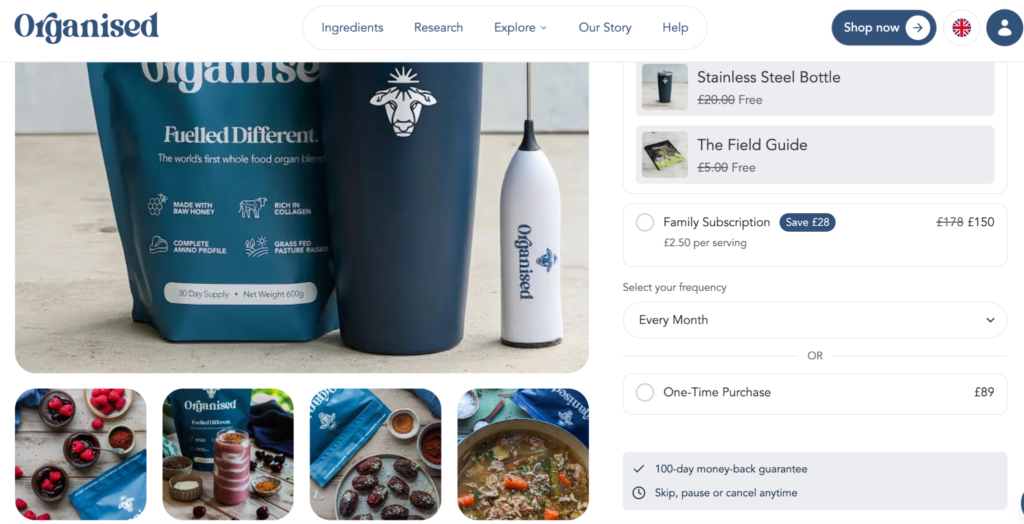
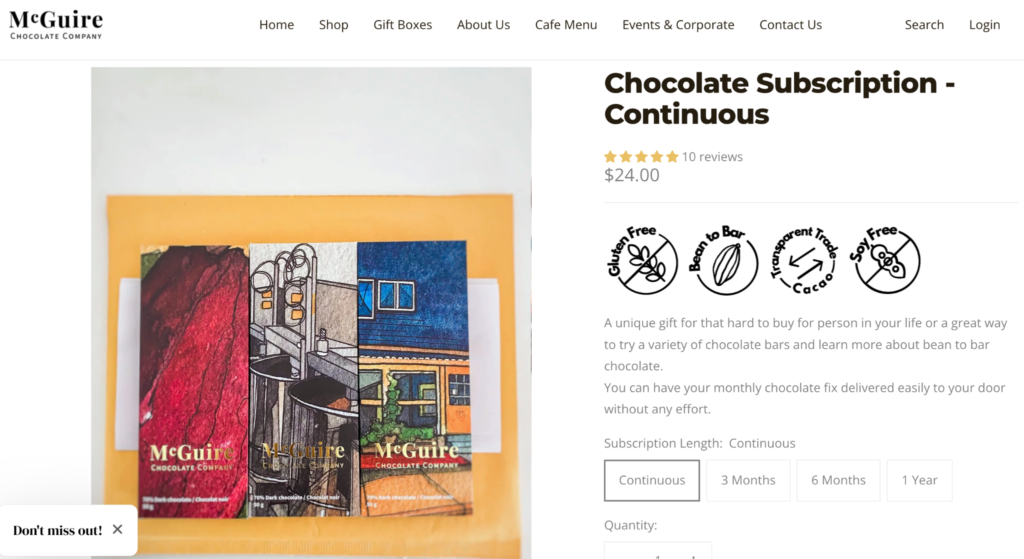
6. Offer multiple cadence options at signup
Instead of offering a default delivery cadence, set the right cadence before the subscription starts. The same delivery cadence may not work for all your subscribers, and many of them might cancel if there’s a mismatch between their needs and the delivery frequencies.
How to set up multiple cadence at sign up?
- Present cadence selection as a genuine, prominent choice
- Use plain-language guidance to help customers self-select appropriately
- Frame cadence selection around the customer’s lifestyle, not your fulfillment schedule
- A/B test whether showing a “recommended” cadence (pre-selected based on product type) improves conversion vs. showing all options equally
- Let subscribers know they have the option of changing their preference later. This reduces decision anxiety
Here’s an example of a brand that offers multiple cadence options.
A candle subscription brand had a default monthly delivery cadence. After they added a question ‘how often do you burn candles’ at sign up, along with three cadence options, they saw a drop in the churn rate. Customers who choose their own frequency are less likely to cancel.
7. Track and optimize cadence performance
Fixing subscription cadence mismatches isn’t a one-time task, it is an ongoing optimization process. The brands that have a higher subscriber retention rate are those that continuously monitor delivery frequency and churn, and make adjustments based on data.
Here’s how you can track and optimize cadence:
- Build a cadence performance dashboard that tracks churn rate by delivery frequency segment
- Are monthly subscribers churning faster than bi-weekly ones? Do quarterly subscribers have higher LTV but lower engagement?
- Run regular cohort analyses: group subscribers by their cadence selection at signup and track their 30/60/90/180-day retention curves against each other
- Define a clear metric hierarchy: churn rate by frequency is your primary KPI, followed by skip rate, LTV by cadence, and CSAT scores from post-cancellation surveys
- Run controlled tests when changing default cadences so you can isolate the impact clearly
- Monitor the “skip-to-cancel pipeline”: what % of customers who skip two or more times go on to cancel within 60 days, and how does this rate change as you improve cadence flexibility?
- Review cancellation reasons monthly. “Too much product” and “don’t need it that often” are direct cadence mismatch signals that should feed back into your optimization roadmap
Improve your retention rate by solving subscription cadence mismatch
By setting up adaptive subscription delivery, you can increase customer engagement, retention rate, and reduce subscription churn. The right delivery cadence isn’t a one-time setting, it is an ongoing optimization process based on customer preference.
To set up a flexible and agile subscription cadence, you need a smart subscription tool that is intuitive, makes processes easy, and automates repetitive tasks.
Meet Appstle Subscriptions App, which has a suite of built-in features for easy subscription management. The app’s integration capabilities make it easy to sync other apps and enhance your subscription delivery cadence processes.
Install Appstle Subscriptions App in your Shopify store today!